The Fusion of Coastal and Mid-Century Modern Aesthetics
Coastal Mid-Century Modern design emerges as a harmonious blend of two distinct styles. On one hand, the Mid-Century Modern aesthetic, known for its clean lines, organic shapes, and a strong emphasis on functionality, marries beautifully with the Coastal style’s light, airy feel and its connection to the natural world. This fusion creates an ambiance that is both tranquil and elegantly modern.
The key to this blend is in its subtlety and balance. Furniture pieces typical of the Mid-Century era, such as Eames chairs or teak consoles, are complemented by coastal elements like soft linen fabrics, sea-inspired artwork, and a color palette that echoes the hues of the beach and sea. The result is a living space that feels both timeless and intimately connected to the natural environment.
The Evolution of Interior Design Trends: From Mid-Century Modern to Biophilic and Coastal Influences
Interior design is an ever-evolving field, reflecting changes in cultural trends and human needs. The Mid-Century Modern movement, which started in the mid-20th century, focused on simplicity, functionality, and the integration of nature into design—a response to the preceding era’s ornate and cluttered styles. This design philosophy has not only endured but has evolved to incorporate more explicit connections to nature, leading to the rise of Biophilic Design.
Biophilic Design goes beyond mere aesthetics, embedding the essence of nature into the living space to enhance well-being. It involves the use of natural materials, the integration of living plants, and the maximization of natural light and airflow. When combined with Coastal design elements, it takes a holistic approach that not only looks good but feels good. The integration of natural elements, such as wood, stone, and fibers, along with a color palette inspired by the outdoors, brings a sense of calm and serenity into the home.
This evolution signifies a shift towards more mindful and sustainable living, where the design not only serves aesthetic purposes but also promotes health and well-being.
Implementing Coastal Mid-Century Modern Design in Your Home
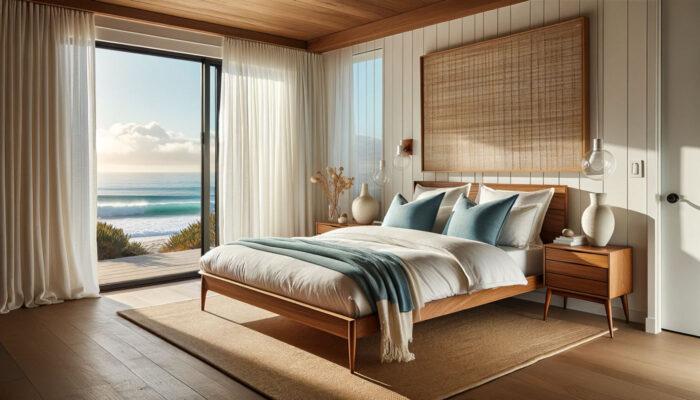
Master Bedroom: Merging Coastal Calmness with Mid-Century Modern Furniture
In the master bedroom, the goal is to create a serene sanctuary that combines the clean lines of Mid-Century Modern furniture with the soothing elements of Coastal design. Opt for a simple yet elegant bed frame in a natural wood finish, a signature of Mid-Century style. Complement this with soft, natural textiles in a neutral palette—think sand, seafoam, and sky blue. Incorporate elements like a jute rug or woven wall hangings to add texture and warmth.
Lighting is key in achieving this blend. Choose fixtures with geometric shapes typical of the Mid-Century aesthetic, but in materials or colors that evoke the coast, like frosted glass or a pale driftwood finish. Large windows that allow natural light to flood the room during the day are ideal. For artwork, select pieces that depict tranquil seascapes or abstracts in calming hues.
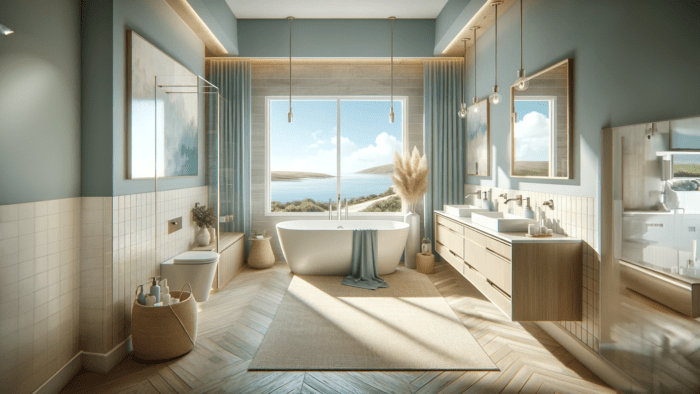
Master Bathroom: Achieving Cohesion with the Bedroom Through Design and Decor
Continuity between the master bedroom and bathroom enhances the overall aesthetic and flow of your space. Carry the same color palette into the bathroom, utilizing tiles and textiles in soft coastal colors. Mid-Century Modern influence can be seen in the clean lines of the vanity and fixtures, perhaps in a vintage style with modern functionality.
Incorporate natural elements like a wooden stool or bath mat to bring warmth into the space. Plants that thrive in humid environments can add a touch of greenery, reinforcing the Biophilic aspect. Decorative elements like glass jars filled with sand, seashells, or beach glass can serve as subtle nods to the Coastal theme.
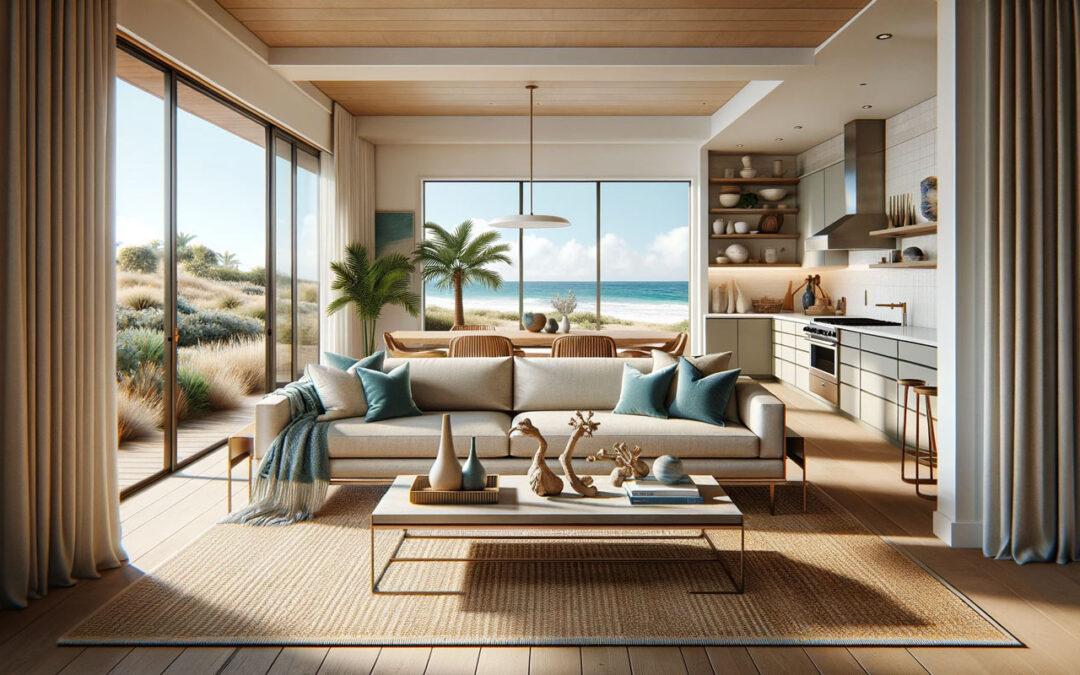
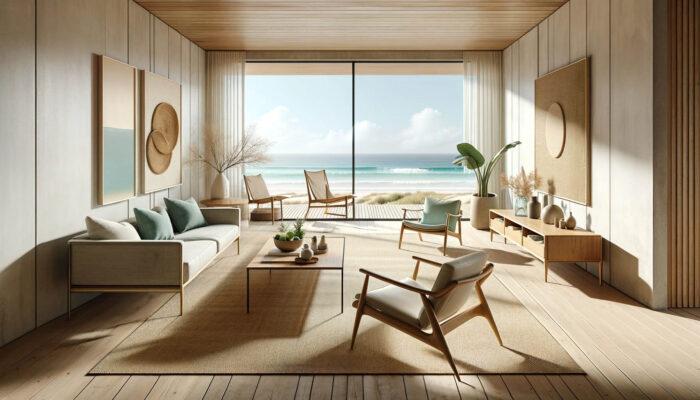
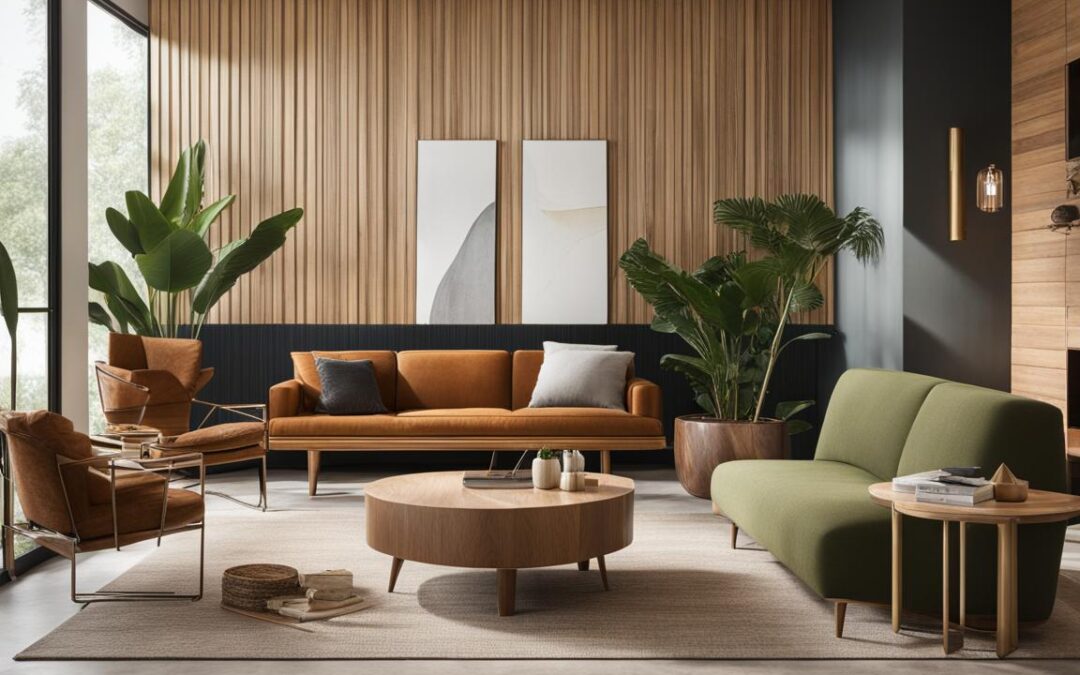
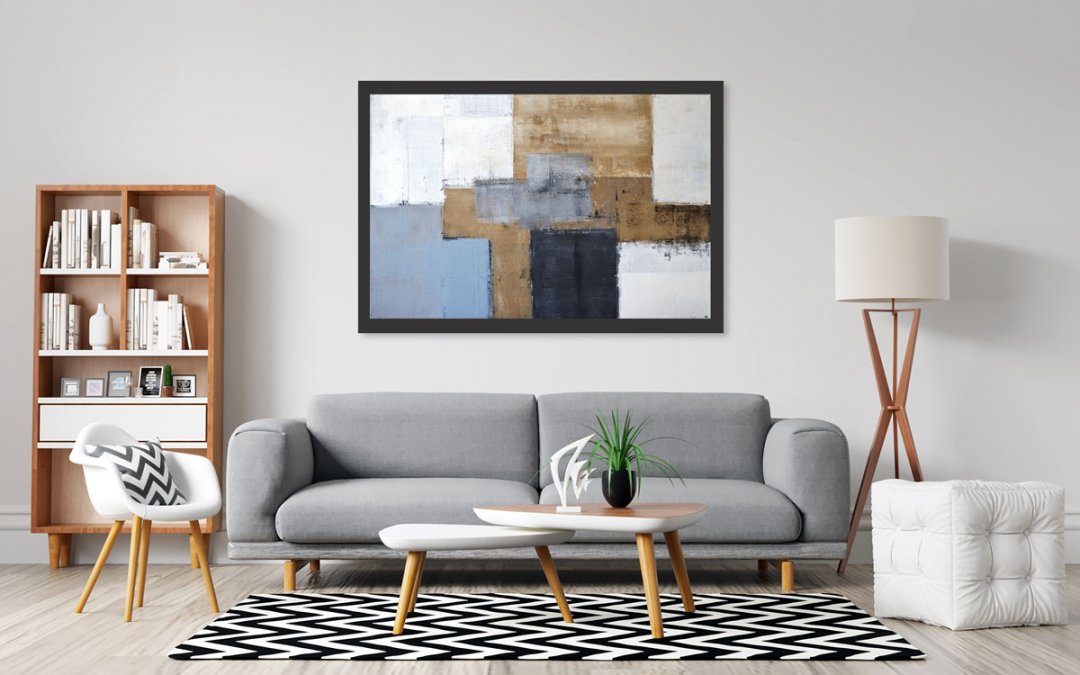
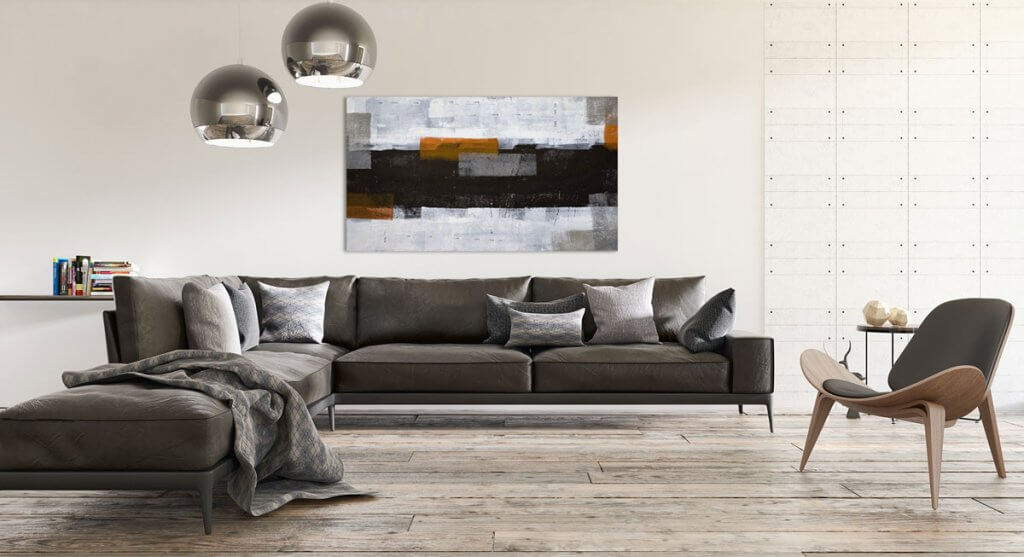
Living Room: A blend of natural and modern design features.
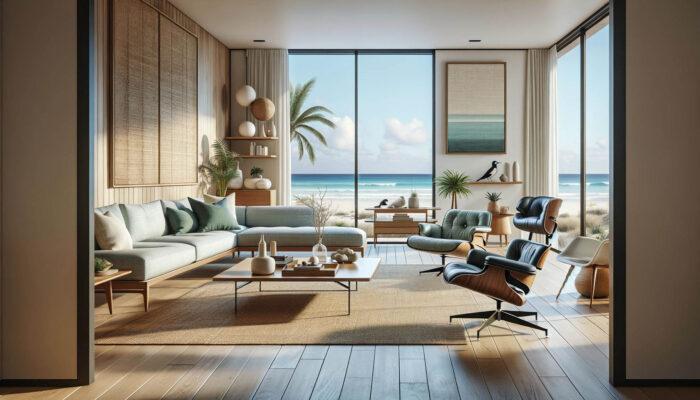
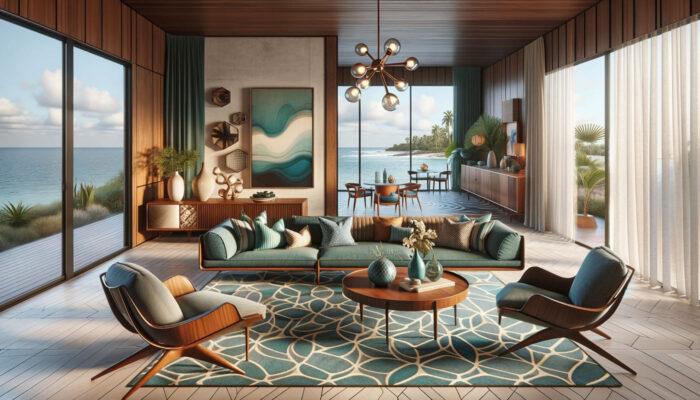
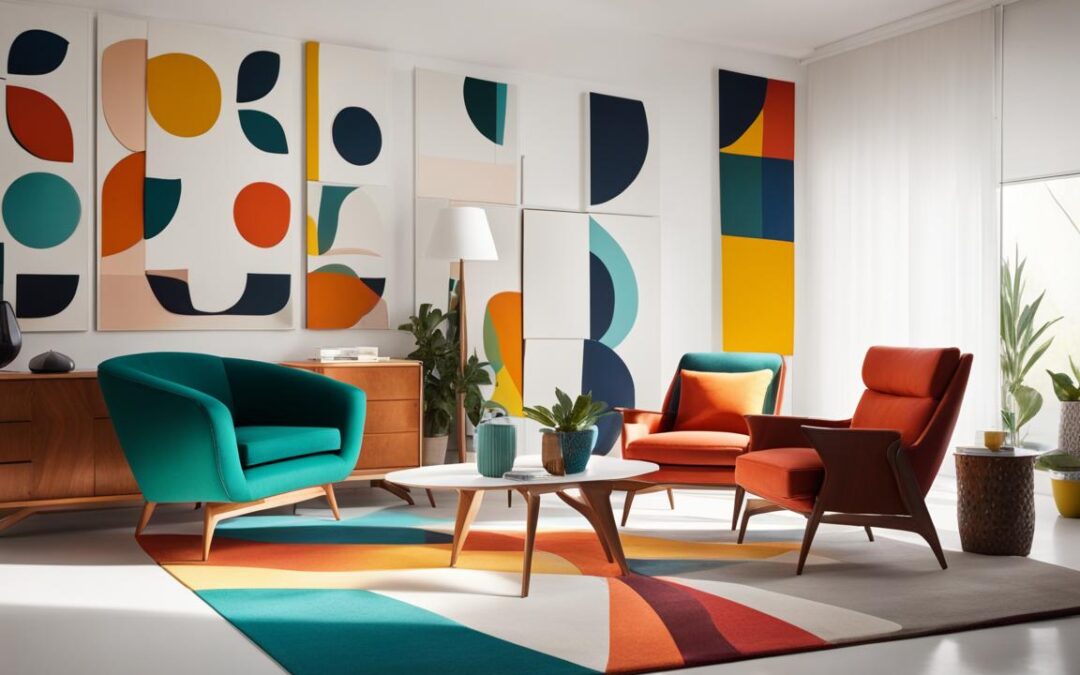
This beautiful coastal mid-century modern living room exudes an atmosphere of serene elegance and relaxed sophistication. The approach to decorating this space is a masterful blend of simplicity and thoughtful design, embodying the essence of both coastal calmness and mid-century modern aesthetics.
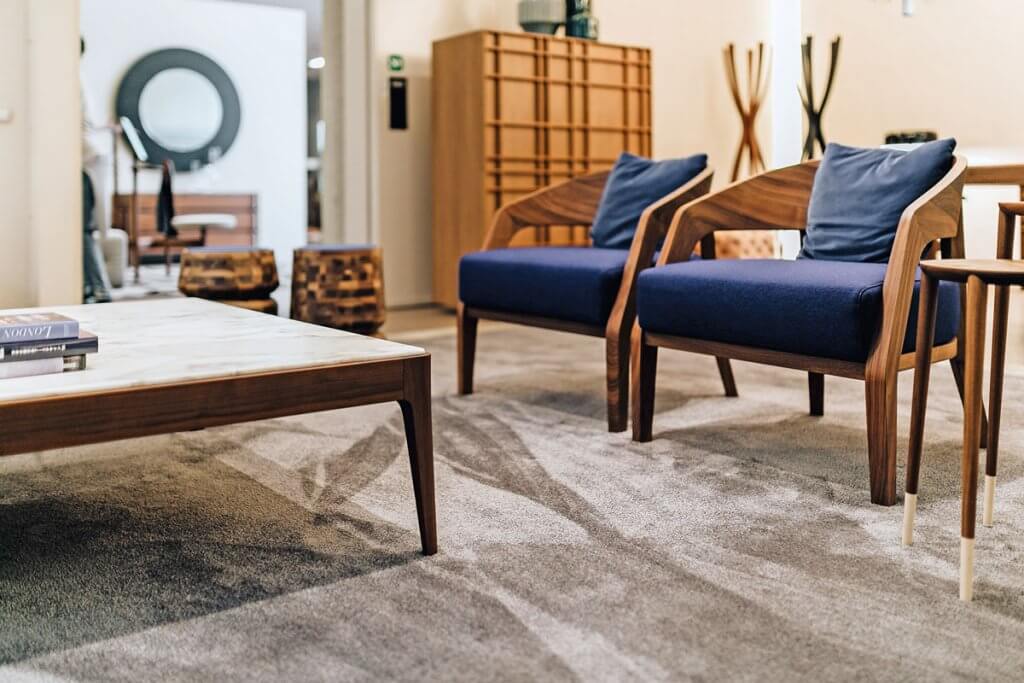
The iconic Eames lounge chairs not only serve as a nod to the mid-century modern era but also offers a comfortable spot for relaxation and contemplation. Its sleek design and warm tones harmonize beautifully with the coastal theme. Complementing the chair is a minimalist teak wood coffee table, its clean lines and warm wood tone adding a touch of organic warmth to the space. A modern, understated sofa anchors the room, offering a welcoming embrace with its plush cushions and inviting form.
The color palette is a soothing mix of soft neutrals, blues, and greens, reminiscent of the hues found in a tranquil coastal landscape. These colors play a crucial role in creating a peaceful and harmonious environment, mirroring the serenity of the sea and the sky. The walls are adorned with minimalist wooden shapes and abstract painting, adding a touch of artisanal charm that ties everything together.
One of the most striking features of the room is the large, wide windows that frame a panoramic view of a serene coastal scene. These windows are not just architectural elements; they are portals to the natural world, inviting in streams of natural light that bathe the room in a soft, calming glow.
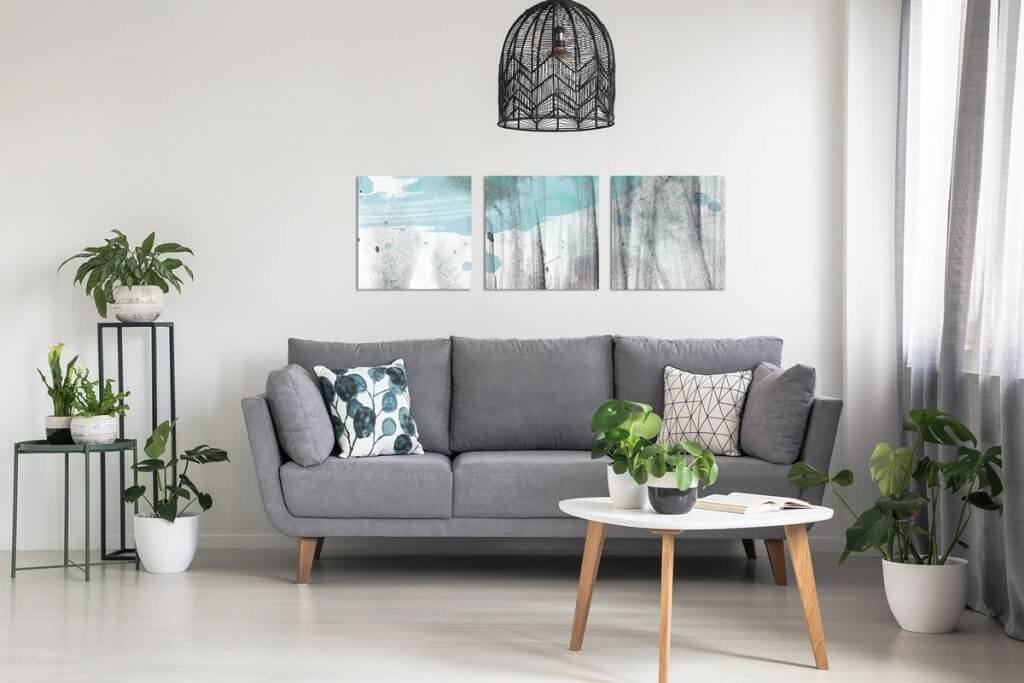
Greenery is strategically placed around the room, with select plants adding a fresh, lively touch. These natural elements reinforce the biophilic aspect of the design, connecting the indoors with the outdoors and enhancing the overall sense of well-being.
In these living rooms, every element has been carefully chosen to create a space that is not just aesthetically pleasing but also emotionally comforting. It’s a room where one can effortlessly unwind, surrounded by the quiet beauty of nature-inspired design. The overall ambiance invites relaxation and reflection, making it the perfect retreat from the hustle and bustle of everyday life.
Coastal Kitchens with a Modern Mid-Century Modern Aesthetic
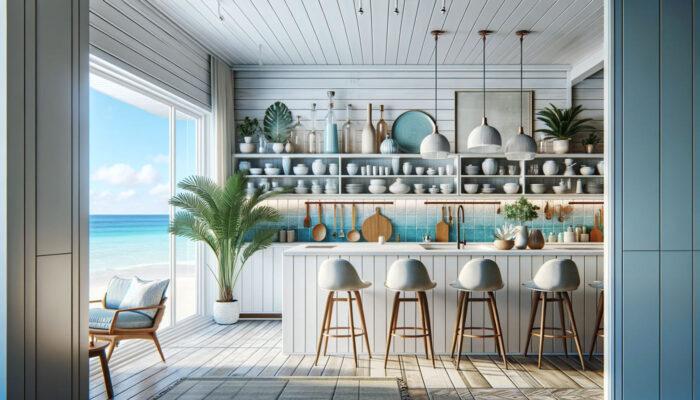
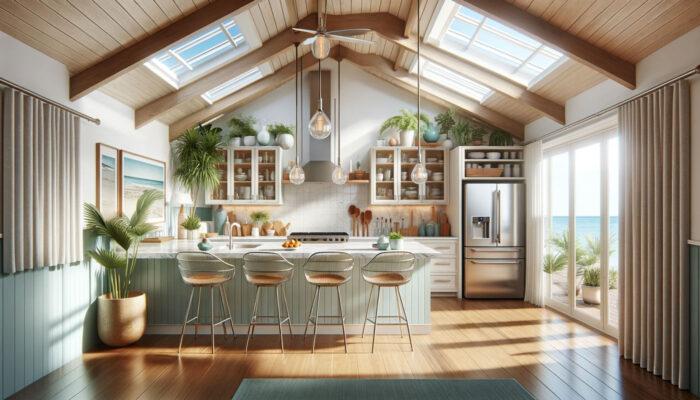
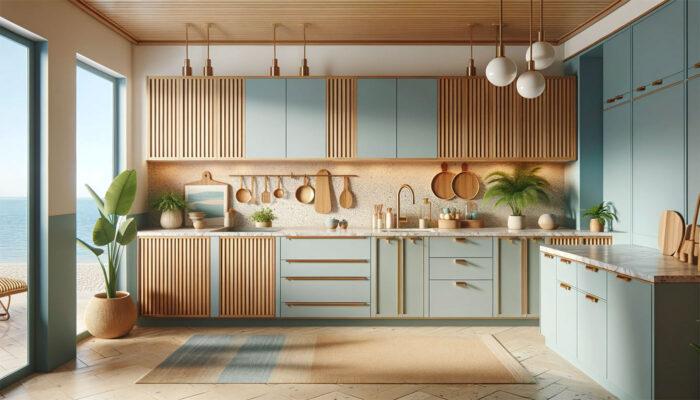
This, luxurious coastal mid-century modern kitchen blends the timeless elegance of mid-century design with the breezy, natural vibe of a coastal setting, creating a space that is both sophisticated and inviting.
Layout and Furnishings
Open Concept: The kitchen boasts an open-plan layout, fostering a sense of spaciousness and fluidity. This design encourages social interaction and provides a seamless transition to other areas of the house, like the dining and living rooms.
Central Island: A large central island, topped with white quartz, serves as the focal point. It’s not just a preparation area but also a casual dining spot, equipped with stylish bar stools that have a minimalist mid-century design. Underneath, the island offers ample storage with flat-panel cabinets, maintaining a sleek and uncluttered look.
Color Scheme and Materials
Palette: The color scheme is predominantly white and light blue, reflecting the coastal theme. Accents of soft sand and seafoam green are interspersed, enhancing the tranquil ambiance.
Materials: Light painted finishes on cabinets and shelves add warmth, while maintaining the clean lines characteristic of mid-century modern aesthetics. Stainless steel appliances provide a touch of modernity and luxury, ensuring the kitchen is equipped for both functionality and style.
Lighting and Views
Natural Light: Large windows and possibly skylights fill the space with natural light, making the kitchen bright and airy.
Views: These windows frame stunning views of the surrounding coastal landscape – whether it be a sandy beach, rocky shoreline, or sprawling ocean – connecting the indoors with the natural beauty of the outdoors.
Accent Lighting: Pendant lights with geometric shapes, a hallmark of mid-century design, hang above the island and dining area, offering focused illumination and adding an artistic touch.
Decorative Elements
Greenery: Indoor plants are strategically placed around the kitchen, bringing in a touch of greenery and reinforcing the biophilic elements of the design.
Open shelving: On the walls, there might be tasteful artwork that complements the color scheme, featuring abstract coastal scenes or mid-century modern motifs.
Overall Atmosphere
The kitchen exudes an atmosphere of relaxed luxury. It’s a space where functionality meets artistry, and the serene, natural beauty of the coast blends seamlessly with the clean, refined lines of mid-century modern design. It’s not just a place for cooking but a hub of the home, where one can enjoy the beauty of nature while indulging in culinary pleasures.
Adding a Coastal Touch to Mid-Century Modern Spaces
To infuse Coastal charm into your Mid-Century Modern home, start with the color palette. Soft neutrals combined with blues and greens reflect the colors of coastal modern beach house design. Use these hues in your textiles, wall colors, and decorative accents.
Furniture should be functional and simple, with clean lines characteristic of Mid-Century Modern design. To soften this look, add textural elements like knitted throws, linen pillows, and natural fiber rugs.
Consider incorporating organic shapes through accessories like mirrors or artwork, and use natural materials wherever possible—wood, stone, and glass work beautifully.
Lighting is another area where these two styles can harmoniously coexist. Choose fixtures that are simple yet elegant, and consider the use of natural materials or colors that tie back to the coast.
Finally, add personal touches through antiques or custom pieces. These items can add character and uniqueness to your space, ensuring your home feels like a true reflection of your style.
FAQ Section
What are key elements of coastal mid-century modern design?
The key elements include a neutral and serene color palette inspired by the coast, clean lines and functionality in furniture, and the integration of natural materials and textures.
How can I balance mid-century modern and coastal styles in my home?
Balance can be achieved by choosing Mid-Century Modern furniture and complementing it with coastal colors, textures, and decorative elements. Maintaining a clean, uncluttered space is essential.
What color palette works best for a coastal mid-century modern interior?
A palette that includes soft neutrals, combined with blues, greens, and occasional earthy tones, works best to create a soothing and harmonious space.
Mid-century modern interior design is a popular style that has captivated homeowners, designers, and enthusiasts for decades. In order to fully understand mid-century modern color psychology in design, it is important to explore its definition, historical context, and key characteristics. By delving into these aspects, we can gain a deeper understanding of how color choices can shape interiors and influence moods in mid-century modern living spaces.
Key Takeaways
Mid-century modern interior design is characterized by simplicity, functionality, and innovative use of materials.
Understanding the historical context and origins of mid-century modern design can help in selecting the right colors to create a harmonious and visually pleasing environment.
Clean lines, organic forms, and the integration of indoor and outdoor spaces are key characteristics of mid-century modern design that influence color choices.
Color psychology plays a significant role in shaping the aesthetics and moods of mid-century modern interiors.
Creating a mid-century modern color palette involves carefully selecting colors that evoke the desired aesthetic and emotional responses.
What is Mid-Century Modern?
Mid-century modern refers to a design movement that emerged between the 1940s and 1960s, capturing the post-World War II era. It is characterized by simplicity, functionality, and the innovative use of materials. This iconic style continues to captivate homeowners, designers, and enthusiasts due to its timeless appeal and unique aesthetic.
Understanding the role of color psychology in mid-century modern design is essential to creating authentic and cohesive interiors. Colors have the power to evoke specific emotions and transform the mood of a space. In mid-century modern design, the significance of color psychology can be seen in the selection of furniture, decor, and overall color schemes.
The historical context and origins of mid-century modern design play a crucial role in understanding how color choices were influenced by societal changes and technological advancements of the time. The mid-century period was characterized by a shift towards modernism and a celebration of progress. This was reflected in the use of bold, vibrant colors that symbolized optimism and innovation.
“Color and light are the lifeblood of any interior, so it is important to consider the psychological impact of colors in mid-century modern decor. When selecting colors, consider their ability to create visual harmony, evoke desired emotions, and enhance the overall aesthetics of your space.”
In addition, the significance of color psychology in mid-century modern furniture cannot be overlooked. Colors were carefully chosen to complement the clean lines and organic forms of mid-century furniture, creating a harmonious balance between form and function. Vibrant pops of color were often used as accents to add visual interest and create striking focal points within the space.
By understanding the historical context, key characteristics, and the significance of color psychology, you can effectively incorporate mid-century modern design principles into your space. Whether you are selecting furniture, choosing a color scheme, or adding decorative accents, considering color psychology will help you create an authentic and visually pleasing mid-century modern-inspired environment.
Key Characteristics of Mid-Century Modern Interior Design
Mid-century modern interior design is known for its distinct aesthetic and timeless appeal. The key characteristics of this design style heavily influence color choices and create a unique atmosphere in living spaces.
One of the defining features of mid-century modern design is the emphasis on clean lines and organic forms. These sleek and minimalist shapes allow for a sense of openness and simplicity. When it comes to color psychology, this characteristic creates a sense of calm and balance, allowing the colors to stand out and make a statement.
Functionality and practicality are also crucial aspects of mid-century modern design. Furniture and decor pieces are often designed with a purpose, offering both style and usability. When considering the psychological impact of colors in mid-century modern decor, it is important to choose colors that enhance the functionality of the space while maintaining a cohesive aesthetic.
The integration of natural materials is another key characteristic of mid-century modern design. Wood, leather, and other natural elements bring warmth and texture to the space, creating a connection to nature. When selecting colors, it is important to consider the harmonious relationship between the natural materials and the color scheme, ensuring they complement each other effectively.
Key Characteristics
Psychological Impact
Clean lines and organic forms
Creates a sense of calm and balance
Functionality and practicality
Enhances usability while maintaining a cohesive aesthetic
Integration of natural materials
Brings warmth and texture, creating a connection to nature
Mid-century modern design is also characterized by a neutral color palette with bold accents. The use of neutral colors such as whites, grays, and beiges as a base allows for versatility and a timeless look. Bold accent colors, on the other hand, add vibrancy and personality to the space. When considering the psychological impact of colors in mid-century modern decor, these bold accent colors can evoke specific emotions and create focal points in the room.
The integration of indoor and outdoor spaces is another distinguishing characteristic of mid-century modern design. Large windows and open floor plans allow for a seamless transition between the interior and exterior, creating a sense of harmony and connection. When selecting colors, it is important to consider how they will interact with natural light and the surrounding outdoor environment, enhancing the overall mid-century modern aesthetic.
Mid-Century Modern Furniture and Decor
When it comes to creating a mid-century modern-inspired space, understanding color psychology is key. By harmonizing colors in your mid-century modern interiors, you can achieve a cohesive and visually appealing design that reflects the essence of this iconic style.
One essential aspect to consider is the timeless appeal of mid-century modern furniture. Known for its clean lines, organic forms, and innovative use of materials, mid-century furniture sets the foundation for your design. Incorporating furniture pieces in neutral tones allows for versatility in color schemes, while bold accents can add a pop of color and personality to the space.
The use of natural materials and textures is another important element in mid-century modern design. Think wood, leather, and textured fabrics, which create a warm and inviting atmosphere. When choosing colors for your decor, consider earth tones that complement the natural materials, such as warm browns, soft greens, and muted oranges.
“Mid-century modern design is all about simplicity and functionality, but that doesn’t mean you can’t have fun with color. By understanding color psychology and using it to guide your choices, you can create a mid-century modern space that is both visually striking and harmonious.” – Design expert
Incorporating colors and patterns in your furniture and decor choices is a great way to infuse your space with mid-century modern style. Geometric patterns, such as those found in iconic wallpaper designs or accent pillows, add visual interest and a sense of retro playfulness. Combine these patterns with a well-coordinated color palette to achieve a cohesive look that embodies the mid-century modern aesthetic.
Remember, the key to using color psychology in mid-century modern design is to create a space that reflects your personal style and evokes the desired emotions. By considering the timeless appeal of mid-century modern furniture, incorporating natural materials and textures, and selecting colors and patterns that harmonize with the overall design, you can create a mid-century modern-inspired space that is both visually captivating and emotionally engaging.
Mid-Century Modern Furniture and Decor
Furniture and Decor
Color Choices
Mid-century modern furniture
Neutral tones for versatility, bold accents for personality
Natural materials and textures
Earth tones that complement the materials (warm browns, soft greens, muted oranges)
Patterns and accents
Geometric patterns in a well-coordinated color palette
Creating a Mid-Century Modern Color Palette
When it comes to mid-century modern design, color choices play a crucial role in creating the desired aesthetic and overall feel of a space. By understanding color psychology and the key principles of mid-century modern style, you can effectively create a captivating color palette that enhances the authenticity and visual appeal of your design.
Choosing the Right Colors
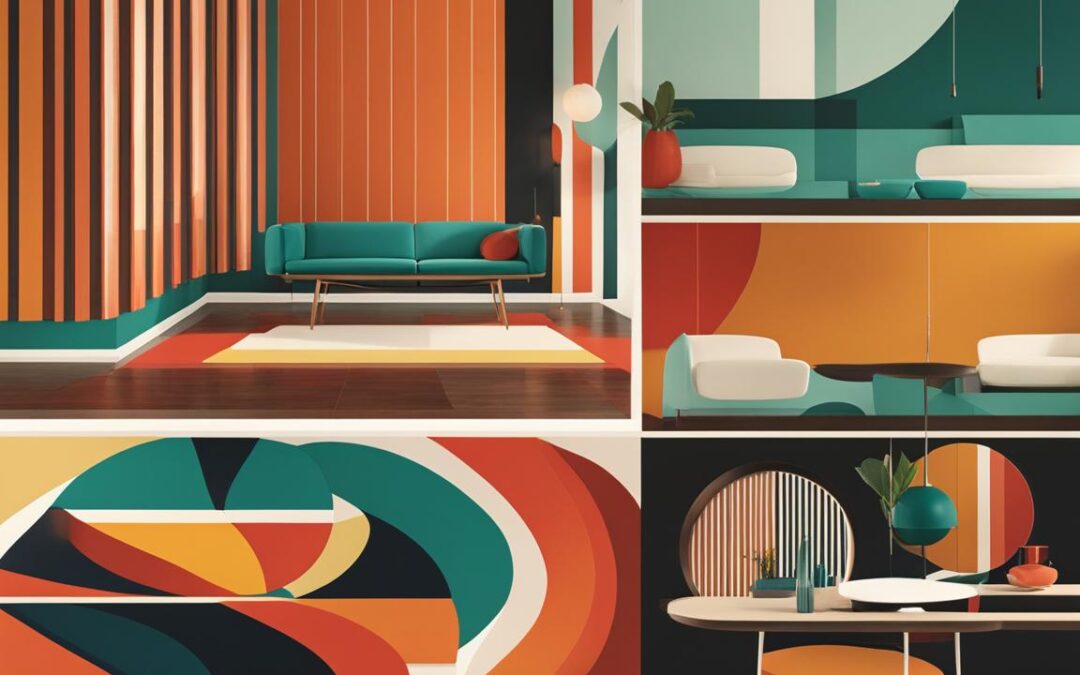
Mid-century modern color schemes are characterized by a combination of neutral tones and bold accent colors. Neutrals such as white, beige, or gray create a clean and minimalist backdrop, allowing the vibrant accent colors to stand out. Popular accent colors in mid-century modern design include mustard yellow, burnt orange, teal, and olive green. These colors add warmth, visual interest, and a retro vibe to the space.
Additionally, considering the psychological impact of colors can help you select the right hues for your mid-century modern-inspired space. For example, yellow is often associated with energy and optimism, while blue evokes a sense of calmness and serenity. Understanding these associations can guide you in choosing colors that align with the desired mood and atmosphere of your design.
Creating Visual Harmony
When creating a mid-century modern color palette, it’s important to achieve visual harmony by balancing the use of neutrals and accent colors. One approach is to use the 60-30-10 rule, where 60% of the space is dedicated to a dominant neutral color, 30% to a secondary neutral or mid-tone color, and 10% to the bold accent color. This ratio ensures a balanced and cohesive look.
Furthermore, incorporating geometric patterns is a common practice in mid-century modern design. These patterns can be introduced through wallpapers, textiles, or decorative accessories. They add visual interest and further enhance the retro feel of the space. When selecting patterns, consider the scale and balance of the design to maintain a harmonious aesthetic.
Neutral Colors
Accent Colors
White
Mustard Yellow
Beige
Burnt Orange
Gray
Teal
Table: Common Neutral and Accent Colors in Mid-Century Modern Design
By carefully selecting colors, considering their psychological impact, and using geometric patterns, you can create a captivating mid-century modern color palette that enhances the overall design aesthetic and evokes the desired mood in your space.
Essential Elements of Mid-Century Modern Interior Design
Creating a mid-century modern-inspired space involves incorporating essential elements that shape the overall aesthetic and mood of the interior. By understanding the psychological impact of colors in mid-century modern decor and harmonizing colors in mid-century modern interiors, you can create a visually appealing and harmonious design.
The Key Elements of Mid-Century Modern Interior Design
1. Open Floor Plans and Minimalism: Mid-century modern design emphasizes open and spacious layouts, minimizing unnecessary clutter. This element creates a sense of freedom and simplicity, allowing the design elements to shine.
2. Functionality and Practicality: Mid-century modern spaces prioritize functionality and practicality in their design. Furniture and decor choices are not only aesthetically pleasing but also serve a purpose, enhancing the overall usability of the space.
3. Integration of Nature and Natural Light: Bringing nature indoors is a significant element of mid-century modern design. Large windows, skylights, and the use of natural materials invite natural light and create a connection with the outdoors.
4. Clean Lines and Organic Forms: Mid-century modern design is characterized by clean lines and organic shapes. This element creates a sense of simplicity and harmony, contributing to the distinct aesthetic of the style.
5. Use of Iconic Mid-Century Modern Furniture and Decor: Mid-century modern design is renowned for its iconic furniture pieces and distinct decor choices. Incorporating these elements into the design not only adds authenticity but also contributes to the overall mid-century modern aesthetic.
The Psychological Impact of Colors in Mid-Century Modern Decor
Color choices have a profound psychological impact on the overall mood and atmosphere of a space. In mid-century modern decor, specific colors are utilized to evoke certain emotions and enhance the overall design aesthetic. Here are some examples:
Neutrals: Neutrals such as white, gray, and beige are commonly used as the foundation of mid-century modern interiors. These colors create a sense of simplicity and balance, allowing other design elements to stand out.
Bold Accents: Mid-century modern design often incorporates bold accent colors to add visual interest and create a focal point. Vibrant shades like mustard yellow, teal, and orange can infuse energy and excitement into the space.
Earth Tones: Inspired by nature, earthy hues like olive green, warm browns, and rusty reds are frequently found in mid-century modern decor. These colors create a grounded and organic atmosphere, bringing a sense of calm and connection to the natural world.
By understanding the psychological impact of colors and incorporating the essential elements of mid-century modern design, you can create a visually striking and harmonious interior that captures the essence of this iconic style.
In Summary
Understanding Mid Century Modern Color Psychology in Design is crucial to creating authentic and visually appealing mid-century modern living spaces. By exploring the psychology of colors in mid-century design, we can harness the power of color to evoke specific emotions and enhance the overall aesthetic.
Throughout this article, we have delved into the key characteristics of mid-century modern interior design, the significance of color psychology in mid-century modern furniture and decor, and the process of creating a mid-century modern color palette. By incorporating essential elements such as clean lines, organic forms, and the integration of nature, we can create harmonious and visually striking mid-century modern interiors.
Whether you are a homeowner, designer, or simply an enthusiast, exploring the psychology of colors in mid-century design allows you to make informed color choices and create spaces that exude the timeless elegance and functionality that define the mid-century modern style. So, embrace the power of color and embark on your journey to create captivating mid-century modern-inspired spaces.
FAQ
What is mid-century modern?
Mid-century modern refers to a design movement that emerged between the 1940s and 1960s, characterized by simplicity, functionality, and the innovative use of materials.
How does color psychology influence mid-century modern design?
Color psychology plays a significant role in shaping the aesthetics and moods of mid-century modern living spaces. Understanding the psychological impact of colors helps in creating visually appealing and harmonious interiors.
What are the key characteristics of mid-century modern interior design?
Mid-century modern design is characterized by clean lines, organic forms, functionality, the use of natural materials, a neutral color palette with bold accents, and the integration of indoor and outdoor spaces.
How does color psychology influence mid-century modern furniture and decor?
By considering color psychology in mid-century modern furniture and decor choices, designers can create a cohesive and visually appealing space that aligns with the overall mid-century modern aesthetic.
How do you create a mid-century modern color palette?
Creating a mid-century modern color palette involves carefully selecting colors that evoke the desired aesthetic and emotional responses. Elements such as neutrals, earth tones, vibrant pops of color, and geometric patterns are commonly found in mid-century modern color palettes.
What are the essential elements of mid-century modern interior design?
Essential elements of mid-century modern design include open floor plans, minimalism, functionality, the integration of nature and natural light, clean lines and organic forms, and the use of iconic mid-century modern furniture and decor.
During the mid-twentieth century, a new wave of architects emerged, pushing the boundaries of design and shaping the future of modern architecture. These influential architects were at the forefront of the mid century modern movement, creating innovative and iconic buildings that still inspire today. From Eero Saarinen’s TWA Terminal to Richard Neutra’s Kaufmann House, their designs reflect the social and cultural changes of the time. Let’s dive into the world of mid century modern influential architects and explore their lasting impact.
Key Takeaways:
Mid century modern architecture was a groundbreaking movement that shaped the future of design.
Influential architects of the mid century modern movement created innovative and iconic buildings.
Designs by these architects continue to inspire architects and designers today.
The mid century modern style is known for its distinct features, including clean lines and large windows.
Architects like Eero Saarinen, Alvar Aalto, and Richard Neutra left a lasting impact on the architectural world.
The Mid Century Modern Style: Recognizing the Key Features
The mid century modern style is characterized by its unique features that distinguish it from other architectural movements. These distinctive elements come together to create the iconic mid century modern look that is cherished and celebrated to this day.
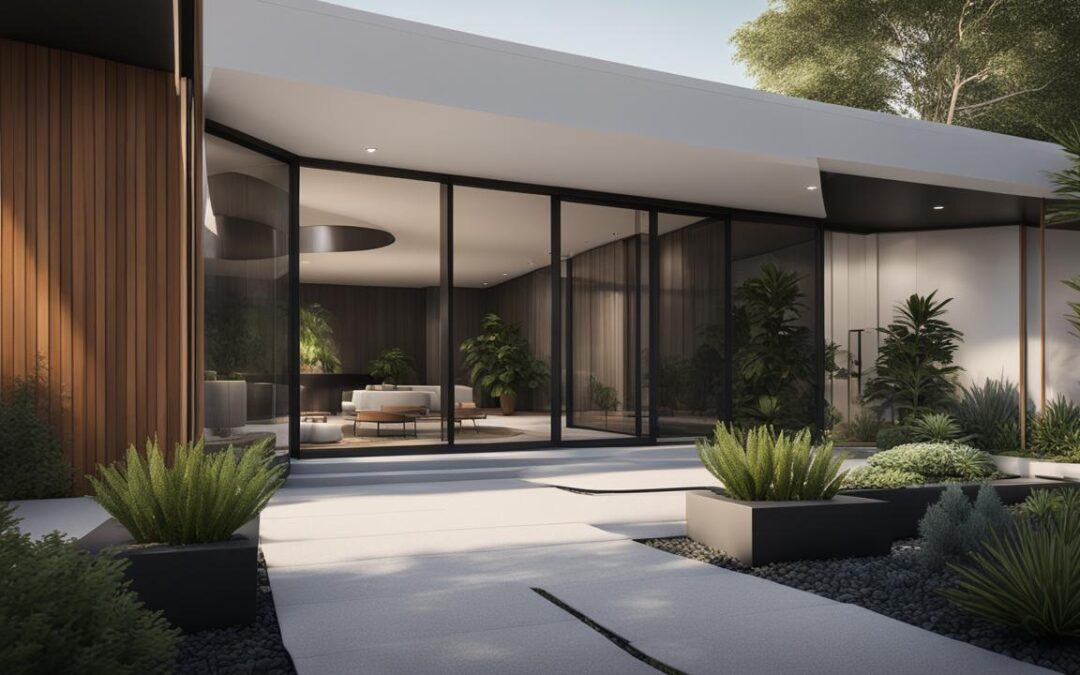
Flat planes and clean geometric lines: The use of flat surfaces and crisp, angular lines is a defining characteristic of mid century modern architecture. This design approach creates a sense of simplicity and minimalism.
Large windows to bring in natural light: The incorporation of expansive windows is another key feature of mid century modern homes. These windows allow for ample natural light to flood the interior spaces, blurring the boundaries between indoors and outdoors.
Changes in elevation to create unique spaces:Mid century modern architecture often incorporates variations in height and levels within a single structure. This creates visually interesting spaces and adds depth and dimension to the overall design.
Strong connection with nature: The mid century modern style embraces a deep appreciation for the natural environment. This is reflected in the use of organic materials, such as wood and stone, and the integration of outdoor elements, such as courtyards and gardens, into the design.
“The mid century modern style celebrates simplicity, functionality, and the seamless integration of design and nature. It is a timeless architectural movement that continues to inspire and captivate.” – Architectural Digest
Inspiration from Mid Century Modern Interiors
The mid century modern style extends beyond the architecture itself and is often reflected in the interiors of homes and buildings from this era. Some key features of mid century modern interiors include:
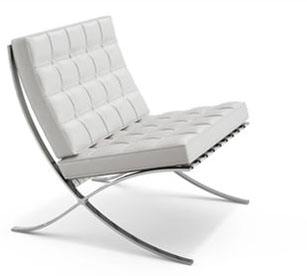
Minimalist furniture: Mid century modern interiors often feature sleek and minimal furniture designs. Clean lines, organic shapes, and a focus on functionality are prominent in pieces such as the iconic Eames lounge chair and the classic Barcelona chair.
Bold colors and patterns: The use of bold and vibrant colors, as well as geometric patterns, adds a touch of playfulness and personality to mid century modern interiors. From mustard yellows to aqua blues, these colors evoke a sense of nostalgia and energy.
Natural materials: Mid century modern interiors showcase the beauty of natural materials, such as wood, leather, and metal. These materials add warmth and richness to the overall design, complementing the clean lines and minimalist aesthetic.
Open floor plans: The mid century modern style embraces open and flowing spaces, with an emphasis on creating a seamless connection between different areas of the home. This allows for a sense of spaciousness and promotes a sociable and interactive environment.
The mid century modern style continues to be a source of inspiration for contemporary architects, designers, and homeowners alike. Its timeless appeal and emphasis on simplicity, functionality, and connection with nature make it a truly enduring architectural movement.
Eero Saarinen: Pushing the Boundaries of Modern Design
When discussing influential architects of the mid century modern design movement, it is impossible to overlook the groundbreaking work of Eero Saarinen. Born in Finland and later becoming a naturalized American citizen, Saarinen made a significant impact on the architectural world with his futuristic and innovative designs. His creations pushed the boundaries of modern design, leaving a lasting impression on the industry.
One of Saarinen’s most renowned projects is the TWA Terminal at JFK airport in New York. Completed in 1962, this iconic structure showcases his unique approach to architecture, with its sweeping curves and futuristic aesthetic. The terminal exemplifies Saarinen’s ability to combine functionality with artistic expression, creating a space that is as visually striking as it is practical.
Another notable work of Saarinen’s is the Gateway Arch in St. Louis, Missouri. Completed in 1965, the arch stands as a symbol of American progress and innovation. Its graceful curves and towering presence create a sense of awe and wonder, solidifying Saarinen’s reputation as a visionary architect.
Through his bold and daring designs, Eero Saarinen contributed greatly to the mid century modern movement. His ability to merge form and function resulted in iconic structures that continue to inspire architects and designers to this day.
Notable Works by Eero Saarinen:
Building
Location
Year Completed
TWA Terminal
JFK Airport, New York
1962
Gateway Arch
St. Louis, Missouri
1965
Alvar Aalto and Arne Jacobsen: Scandinavian Influences in Mid Century Modern Design
Scandinavian design has had a profound impact on the mid century modern movement, and two architects stand out as influential figures in this regard – Alvar Aalto and Arne Jacobsen. Their unique approaches to design, rooted in simplicity and functionality, have left a lasting mark on the world of architecture.
Alvar Aalto, a Finnish architect, transitioned from Nordic Classicism to a more organic modernist style. He believed that architecture should be in harmony with nature and created buildings that embraced their surroundings. Aalto’s designs often featured organic forms, natural materials, and a focus on human comfort and well-being. His iconic works include the Finlandia Hall in Helsinki and the Paimio Sanatorium.
Arne Jacobsen, a Danish architect, was known for his architectural functionalism. He believed that design should be driven by the needs of the user, and his buildings reflected this philosophy. Jacobsen’s designs were characterized by clean lines, geometric shapes, and a minimalist aesthetic. His most famous work, the SAS Royal Hotel in Copenhagen, showcases his meticulous attention to detail and innovative use of materials.
Both Aalto and Jacobsen’s contributions to mid century modern design can still be seen today in the iconic homes and buildings they created. Their emphasis on simplicity, functionality, and a connection with nature continues to inspire architects and designers around the world.
Architect
Country
Famous Works
Alvar Aalto
Finland
Finlandia Hall, Paimio Sanatorium
Arne Jacobsen
Denmark
SAS Royal Hotel, St. Catherine’s College
Alvar Aalto: Organic Modernism
Alvar Aalto’s architectural style can be described as organic modernism. He believed that buildings should be in harmony with nature, and his designs often incorporated organic forms and natural materials. One of his most famous works, the Finlandia Hall in Helsinki, exemplifies this approach. The building’s curvilinear form mimics the surrounding landscape, while the extensive use of wood and natural light creates a warm and inviting atmosphere.
Arne Jacobsen: Architectural Functionalism
Arne Jacobsen’s architectural style can be characterized as architectural functionalism. He believed that design should prioritize the needs of the user, resulting in buildings that are not only visually pleasing but also highly functional. The SAS Royal Hotel in Copenhagen is a prime example of Jacobsen’s approach. The hotel’s clean lines, minimalist aesthetic, and attention to detail create a sense of elegance and efficiency.
Ludwig Mies van der Rohe and Richard Neutra: Pioneers of Modernist Architecture
Ludwig Mies van der Rohe and Richard Neutra were two influential architects who played significant roles in shaping mid century modern design. Their innovative and visionary approach to architecture left a lasting impact on the architectural world, inspiring future generations of designers.
Mies van der Rohe, a German-American architect, is best known for his iconic Farnsworth House. This masterpiece of modernist architecture showcases his minimalist and functional design principles. The house, located in Illinois, is a prime example of Mies van der Rohe’s belief in “less is more,” with its sleek lines, open floor plan, and extensive use of glass. It seamlessly integrates with the surrounding natural landscape, blurring the boundaries between indoors and outdoors.
Neutra, on the other hand, made significant contributions to modernist architecture, particularly in Southern California. His designs focused on blending functionality with aesthetic appeal. Neutra’s innovative use of materials such as steel, glass, and concrete brought a sense of lightness and transparency to his buildings. His residential designs, like the Kaufmann House in Palm Springs, demonstrate his ability to create harmonious living spaces that embrace nature and promote a sense of well-being.
“Architecture is the will of an epoch translated into space.” – Ludwig Mies van der Rohe
Legacy and Influence
The works of Mies van der Rohe and Neutra continue to be celebrated and admired in the world of architecture. Their designs exemplify the timeless appeal of mid century modernism, characterized by simplicity, functionality, and a strong connection to the natural environment. The influence of their innovative ideas can be seen in contemporary architecture and design, inspiring architects and designers to push the boundaries of what is possible.
By embracing modernist principles and incorporating them into their designs, Mies van der Rohe and Neutra contributed to the evolution of architectural language and practice. Their emphasis on clean lines, open spaces, and the integration of nature has had a profound impact on the way we perceive and interact with our built environment.
Through their pioneering spirit, Ludwig Mies van der Rohe and Richard Neutra have left an indelible mark on the world of architecture. Their designs continue to inspire and influence architects and designers today, ensuring that their legacy lives on.
Architect
Famous Work
Ludwig Mies van der Rohe
Farnsworth House
Richard Neutra
Kaufmann House
Conclusion
The mid century modern movement revolutionized modern architecture and design, thanks to the visionary work of influential architects. Their innovative and iconic buildings continue to inspire and shape the future of architecture.
From the Scandinavian simplicity of Alvar Aalto and Arne Jacobsen to the futuristic designs of Eero Saarinen, these architects pushed the boundaries of design and paved the way for the mid century modern style. Their creations embraced clean lines, functional spaces, and a strong connection with nature.
Ludwig Mies van der Rohe and Richard Neutra were pioneers of modernist architecture, leaving a lasting impact on mid century modern design. Mies van der Rohe’s minimalist Farnsworth House and Neutra’s innovative designs in Southern California exemplify the timeless appeal of the movement.
Overall, the contributions of these influential architects to modern architecture cannot be underestimated. Their designs and ideas continue to shape the way we think about architecture, making them true game-changers in the field.
FAQ
What is the mid century modern style recognized for?
The mid century modern style is recognized for its distinct features that include flat planes and clean geometric lines, large windows to bring in natural light, changes in elevation to create unique spaces, and a strong connection with nature.
Who was Eero Saarinen?
Eero Saarinen was a Finnish-American architect who played a significant role in shaping the mid century modern movement. Known for his futuristic and innovative designs, Saarinen’s most famous works include the TWA Terminal at JFK airport and the Gateway Arch in St. Louis.
Which influential mid century modern architects hailed from Scandinavia?
Alvar Aalto and Arne Jacobsen were influential mid century modern architects from Scandinavia. Aalto’s work transitioned from Nordic Classicism to a more organic modernist style, while Jacobsen’s architectural functionalism left a lasting mark on the design world.
Who were Ludwig Mies van der Rohe and Richard Neutra?
Ludwig Mies van der Rohe and Richard Neutra were pioneers of the modernist architecture movement and made significant contributions to mid century modern design. Mies van der Rohe is known for his minimalist and iconic Farnsworth House, while Richard Neutra is celebrated for his innovative and functional designs, particularly in Southern California.
What impact did the mid century modern architects have on architecture and design?
The mid century modern movement brought about a shift in architecture and design, with influential architects leading the way. They created innovative and iconic buildings that still inspire today, leaving a lasting impact on the world of architecture and design.
Step into the timeless allure of mid-century modern design with our exquisite collection of handcrafted wood wall art. Each piece is meticulously created using birch plywood, laser-cutting, hand painting, and precise design affixing. Our unique in-house watercolor technique enhances the wood grain, adding depth and character to every artwork. Choose from multi-panel, round panel, oval panel, and rectangle layouts to find the perfect mid-century modern wall art that complements your style and elevates your space.
Key Takeaways:
Mid-century modern art and decor combine clean lines, bold colors, and iconic designs.
Handcrafted wood wall art adds depth and character to your space.
Choose from various layouts to find the perfect mid-century modern wall art.
Mid-century modern art and decor bring timeless elegance to any room.
Explore our curated collection of mid-century modern art prints to find the perfect piece for your style.
The Characteristics of Mid-Century Modern Art and Decor
Mid-century modern art and design are characterized by their unique aesthetic and distinctive features. This art movement emerged in the mid-20th century and continues to captivate art enthusiasts and interior design enthusiasts today. If you’re drawn to the midcentury style, you’ll appreciate the following characteristics of mid-century modern art and decor:
Clean lines: Mid-century modern art is defined by its clean and sleek lines, which create a sense of simplicity and elegance. The emphasis on minimalism and craftsmanship allows the art to stand out while complementing the surrounding space.
Geometric shapes:Abstract paintings and sculptures with geometric forms are common in mid-century modern art. The use of shapes such as circles, squares, and triangles adds visual interest and creates a sense of harmony within the artwork.
Bold color palette: Mid-century modern art often features a bold and vibrant color palette. Bright hues like mustard yellow, teal, and orange are frequently used to create contrast and evoke a sense of energy and warmth.
These characteristics make mid-century modern art and decor versatile and suitable for various design styles. Whether you prefer contemporary art or minimalist decor, mid-century modern pieces can seamlessly integrate into your space, adding a touch of sophistication and nostalgia.
“Mid-century modern art is all about clean lines, geometric shapes, and a bold color palette. It’s a timeless style that brings a sense of sophistication to any room.” – Interior Design Expert
To further illustrate the essence of mid-century modern art and decor, let’s take a closer look at a table showcasing some iconic mid-century modern artworks:
Artwork
Artist
Year
Autumn Rhythm (Number 30)
Jackson Pollock
1950
No. 14, 1960
Mark Rothko
1960
Arc of Petals
Ellsworth Kelly
1951
These artworks represent the mid-century modern style with their abstract compositions, bold color choices, and emphasis on shape and form. They showcase the artistic vision and innovation of renowned artists who shaped the movement.
Summary:
Mid-century modern art and decor are characterized by their clean lines, geometric shapes, and bold color palettes. This timeless style brings a sense of sophistication to any space and works well with contemporary or minimalist decor. Iconic artworks by renowned artists like Jackson Pollock and Mark Rothko exemplify the mid-century modern aesthetic. By incorporating mid-century modern art into your interior design, you can create a stylish and inviting environment that pays homage to the art movement’s rich history.
The Timelessness of Mid-Century Modern Design
Mid-century modern design is known for its timelessness and has remained popular for decades. Iconic pieces like the Lounge Chair by Ray and Charles Eames are still revered and sought after today. The design emphasizes clean lines, simple organic and geometric forms, and functionality. It combines strong plastic materials with traditional materials like solid wood and aluminum, creating furniture and objects of unmatched quality and comfort.
One of the key elements that contribute to the timelessness of mid-century modern design is its focus on simplicity. The clean lines and minimalist aesthetic create a sense of calm and balance in any space. Whether you have a small apartment or a large family home, mid-century modern furniture and decor can effortlessly blend in and enhance the overall look and feel of the room.
“Mid-century modern design is not just a trend; it’s a timeless aesthetic that continues to influence contemporary design. Its enduring appeal lies in its ability to seamlessly integrate with different styles and eras, making it a versatile choice for any interior.”
Another characteristic of mid-century modern design is the use of organic shapes and natural materials. The Eames era design, named after the renowned designer duo Ray and Charles Eames, embraced the use of molded plywood, fiberglass, and other innovative materials. This combination of modern materials with traditional craftsmanship creates pieces that are not only visually stunning but also durable and long-lasting.
The Iconic Pieces of Mid-Century Modern Design
When we talk about mid-century modern design, certain iconic pieces immediately come to mind. The Lounge Chair and Ottoman by Ray and Charles Eames, the Tulip Table by Eero Saarinen, and the Eames Molded Plastic Chair are just a few examples of the timeless beauty of mid-century modern design.
Iconic Piece
Description
Lounge Chair and Ottoman
The epitome of comfort and style, this iconic chair offers a perfect balance of form and function.
Tulip Table
Sleek and sculptural, this table adds a touch of elegance to any dining or living space.
Eames Molded Plastic Chair
This chair showcases the innovative use of materials, providing both comfort and artistic appeal.
These iconic pieces continue to inspire designers and homeowners alike with their timeless design and enduring popularity. They are not just furniture; they are works of art that bring beauty and sophistication to any interior.
Mid-Century Modern Art and Interior Design
Mid-century modern is not just limited to art and decor but is also a popular interior design style. Its versatile style and functional decor make it a perfect choice for transforming any space. Whether you have a complete mid-century modern interior or want to incorporate individual pieces into your existing decor, this style adds a touch of elegance and retro charm.
With its clean lines, bold colors, and blocky shapes, mid-century modern design works well in various settings. It meshes seamlessly with different color schemes, allowing you to experiment and create your own unique style. The timeless beauty of this design aesthetic makes it a popular choice for homeowners and interior designers alike.
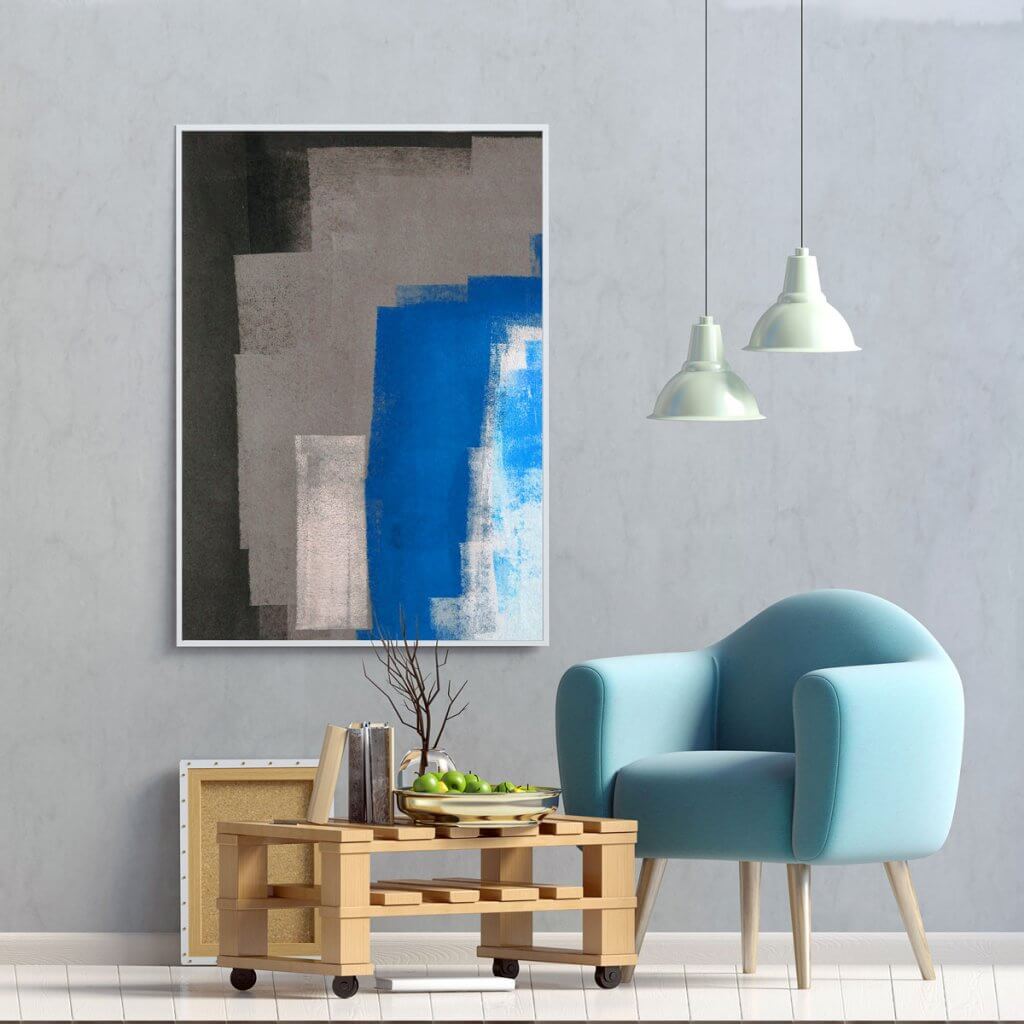
When it comes to mid-century modern wall decor, the options are endless. From abstract paintings to vintage artwork, you can find pieces that suit your personal taste and complement your space. The vibrant colors and geometric patterns often found in mid-century modern art add visual interest and create a focal point in any room.
Examples of Mid-Century Modern Wall Decor:
Artwork
Description
Abstract painting with bold colors and geometric shapes.
Vintage artwork with a retro feel, showcasing the iconic design of the era.
Contemporary piece that combines mid-century modern elements with a modern twist.
By incorporating mid-century modern art and interior design into your home, you can create a space that is stylish, inviting, and timeless. Whether you choose to focus on one area or incorporate the aesthetic throughout your entire home, the versatility of mid-century modern style allows you to create a cohesive and visually stunning environment.
Exploring Mid-Century Modern Architecture and Art
The mid-century modern era not only influenced the world of art and interior design but also left a significant impact on architecture. The architectural masterpieces of this period continue to captivate and inspire us with their timeless elegance and innovative design.
Characterized by clean lines, simplicity, and a seamless connection with nature, mid-century modern architecture embraced the ideals of function and form. From iconic skyscrapers in bustling cities to modular homes in the suburbs, this architectural style redefined urban landscapes and transformed people’s way of life after World War II.
Abstract expressionism also flourished during this time, with artists like Mark Rothko and Jackson Pollock pushing the boundaries of traditional art. Through their bold and expressive works, they captured the essence of the mid-century modern era, reflecting the spirit of innovation and freedom that defined the time.
The Timeless Beauty of Mid-Century Modern Architecture
“Architecture should speak of its time and place, but yearn for timelessness.” – Frank Gehry
The enduring allure of mid-century modern architecture lies in its ability to seamlessly blend with contemporary design. Its clean lines, emphasis on natural light, and use of organic materials create a harmonious environment that stands the test of time. Whether it’s the iconic Case Study Houses or the timeless designs of Frank Lloyd Wright, these architectural masterpieces continue to inspire us today.
Abstract Expressionism in Mid-Century Modern Art
Abstract expressionism, a prominent art movement of the mid-century modern era, rebelled against traditional art conventions and sought to capture emotions and ideas through abstract forms and bold brushstrokes. Artists like Rothko and Pollock pushed the boundaries of expression, creating captivating and thought-provoking compositions that still resonate with audiences today.
Artist
Notable Works
Mark Rothko
No. 61 (Rust and Blue), Untitled (Black on Grey)
Jackson Pollock
Lavender Mist, Number 1 (Lavender Mist)
These artists, along with many others, challenged the conventional notions of art and paved the way for future generations of artists to explore new possibilities in the world of abstract expressionism.
Mid-Century Modern Art Movements
Mid-century modern art was a vibrant and diverse movement that encompassed various art movements and styles. From abstract art to pop art and landscape art, artists of the mid-century era pushed boundaries and experimented with new forms of expression. Let’s explore these art movements that captured the spirit of the time.
Abstract Art
Abstract art became increasingly popular during the mid-century modern era. Artists delved into color field painting, using bold and vibrant hues to create visually striking compositions. Geometric patterns and shapes were also prominent, reflecting the clean lines and aesthetics of the mid-century design. Abstract art allowed artists to break free from the constraints of representational art and explore new ways of conveying emotions and concepts.
Pop Art
Emerging in the 1960s, pop art became a significant movement in mid-century modern art. Inspired by popular culture and mass media, artists like Andy Warhol and Roy Lichtenstein created vibrant and bold artworks that celebrated consumerism and challenged traditional notions of art. Collages, bright colors, and popular icons were prevalent in pop art, creating an art form that was accessible and relatable to a wide audience.
Landscape Art
Landscape art took on a new form during the mid-century era. Artists incorporated artificial and dreamy elements into their landscapes, creating surreal and captivating scenes. This departure from traditional landscape painting allowed artists to explore the relationship between nature and human intervention. The result was a unique fusion of realism and abstraction, showcasing the changing landscapes of the modern world.
Mid-century modern art movements paved the way for innovation and creativity. From abstract art to pop art and landscape art, these movements captured the essence of the era and continue to inspire artists today. The boldness, vibrancy, and conceptual nature of mid-century modern art make it a timeless and captivating form of expression.
Table: Overview of Mid-Century Modern Art Movements
Art Movement
Description
Artists
Abstract Art
Focuses on non-representational forms and explores color, shape, and composition.
Jackson Pollock, Mark Rothko
Pop Art
Celebrates popular culture and mass media through vibrant and bold artworks.
Andy Warhol, Roy Lichtenstein
Landscape Art
Combines elements of realism and abstraction to depict changing landscapes.
Georgia O’Keeffe, Richard Diebenkorn
Conclusion
Bring a touch of timeless elegance to your space with Mid-Century Modern art prints. Whether you’re a fan of vintage and retro styling or you prefer a more contemporary look, our curated collection has something for everyone. With clean lines, bold colors, and iconic designs, these art prints can transform any room into a stylish and inviting environment.
Choose from a range of classic abstract paintings, vintage artwork, or contemporary pieces to find the perfect fit for your style. Embrace the Mid-Century Modern aesthetic and elevate your home with its timeless beauty.
Mid-Century Modern art prints are not just decorations; they are statements that express your individuality and love for art. Stand out from the crowd and create a space that reflects your unique taste and personality.
FAQ
What materials are used in the creation of your mid-century modern wood wall art?
Our handcrafted wood wall art is meticulously created using birch plywood, laser-cutting, hand painting, and precise design affixing.
How is the wood grain enhanced in your artwork?
We use a unique in-house watercolor technique that enhances the wood grain, adding depth and character to every piece.
What layout options are available for the mid-century modern wall art?
You can choose from multi-panel, round panel, oval panel, and rectangle layouts to find the perfect piece that complements your style.
What is mid-century modern art and design known for?
Mid-century modern art and design is characterized by clean lines, geometric shapes, and a bold, bright color palette. It draws inspiration from the natural world and uses abstract shapes.
Can mid-century modern design work with different decor styles?
Yes, mid-century modern design is versatile and works well with functional or minimalist decor, bringing sophistication and charm to any room.
What famous artists are associated with the mid-century modern movement?
Some famous artists associated with the mid-century modern movement include Jackson Pollock and Mark Rothko.
Why is mid-century modern design considered timeless?
Mid-century modern design is known for its timelessness and has remained popular for decades. Iconic pieces like the Lounge Chair by Ray and Charles Eames are still revered and sought after today.
How does mid-century modern design transform a space?
Mid-century modern design adds a touch of elegance and retro charm to any space. It meshes seamlessly with different color schemes and can transform any room into a stylish and inviting environment.
Did mid-century modern architecture have an impact on the art world?
Yes, mid-century modern architecture played a significant role in shaping the cityscape and inspiring artists. Abstract expressionism flourished during this period, with artists redefining the art world.
What art movements are associated with mid-century modern?
Mid-century modern art spanned several movements and styles, including abstract art, pop art, and landscape art.
Where can I find mid-century modern art prints?
Explore our curated collection of mid-century modern art prints to find the perfect piece that complements your style and adds a timeless beauty to your home.
Mid century modern design is not just a trend, but a sustainable design approach that marries timeless aesthetics with eco-conscious practices. In this article, we will delve into the concept of mid century modern sustainability in design today, exploring how it can be applied to interior design and room decor ideas. We will also discuss the importance of making environmentally conscious choices in our homes and the impact it can have on the planet.
Key Takeaways:
Mid century modern design combines timeless aesthetics with sustainable principles.
Choosing eco-friendly furniture and decor is essential for mid century modern sustainability.
Preserving and updating existing homes reduces construction waste and environmental impact.
Location plays a significant role in the sustainability of mid century modern homes.
Embracing mid century modern sustainability can create visually appealing and environmentally responsible spaces.
The Greenest Building is the One That’s Already Built
When it comes to sustainable design principles, few statements ring truer than “The greenest building is one that’s already built.” This sentiment especially applies to mid century modern homes, which were constructed with a focus on quality and thoughtful design. These homes possess inherent sustainability characteristics that align perfectly with eco-conscious practices.
Preserving and updating existing mid century modern homes through sustainable remodels presents an opportunity to significantly reduce waste and environmental impact. By opting for renovations instead of tearing down and building new, we can contribute to the preservation of undeveloped land and minimize construction waste. Moreover, by utilizing the existing structural elements and materials, we can optimize resources and reduce the need for new production.
“The greenest building is the one that’s already built.” – Carl Elefante, FAIA
Mid century modern homes are known for their durability and timeless appeal. By embracing sustainable interior design principles, we can retain these qualities while enhancing the energy efficiency and overall sustainability of these spaces. From using eco-friendly materials to incorporating energy-efficient appliances, the possibilities for designing sustainable mid century modern homes are endless.
To illustrate the sustainability of mid century modern homes, let’s take a closer look at the following table:
Characteristic
Sustainability Advantage
Durable Construction
Reduced need for frequent repairs and replacements, minimizing waste.
Open Floor Plans and Natural Light
Maximized access to natural light, reducing the need for artificial lighting and decreasing energy consumption.
Integration with Nature
Promotion of biophilic design, fostering a stronger connection with the natural environment and improving overall well-being.
By recognizing the value of mid century modern homes and understanding how their characteristics align with sustainable design principles, we can make informed choices that promote both style and eco-consciousness. The next section will explore how these principles can be translated into green living in mid century modern homes.
Emphasizing Green Living in Mid Century Modern Homes
Mid century modern design is not only visually appealing but also lends itself well to eco-conscious living. By incorporating environmentally conscious practices into your mid century modern home, you can create a space that is both stylish and sustainable. From choosing eco-friendly furniture to incorporating energy-efficient appliances and implementing sustainable home decor, there are various ways to emphasize green living in your mid century modern home.
Eco-Friendly Furniture Choices
When selecting furniture for your mid century modern home, opt for pieces that are environmentally conscious. Look for furniture made from sustainable materials such as reclaimed or responsibly sourced wood, bamboo, or recycled materials. Vintage or second-hand furniture is also a great choice, as it reduces the demand for new production and extends the lifespan of existing pieces. By choosing eco-friendly furniture, you can significantly reduce your environmental footprint while still maintaining the mid century modern aesthetic.
Energy-Efficient Appliances
To further enhance the sustainability of your mid century modern home, consider upgrading to energy-efficient appliances. Look for appliances with high energy star ratings, which indicates that they are designed to consume less energy while still providing optimal performance. From refrigerators to washing machines and HVAC systems, energy-efficient appliances not only help reduce your carbon footprint but can also save you money on utility bills in the long run.
Environmentally Conscious Home Decor
When decorating your mid century modern home, opt for environmentally conscious choices. Consider using low VOC paint, which has lower levels of harmful chemicals compared to traditional paint. Incorporate natural materials such as organic cotton, hemp, or linen for curtains, rugs, and upholstery. Add indoor plants to improve air quality and create a connection with nature. These small choices can have a big impact on creating a healthier and more sustainable living environment.
Emphasizing green living in your mid century modern home not only benefits the environment but also creates a healthier and more sustainable space for you and your family. By making eco-friendly furniture choices, incorporating energy-efficient appliances, and opting for environmentally conscious home decor, you can truly embrace the essence of mid century modern sustainability.
The Impact of Mid Century Modern Remodeling on the Environment
When it comes to sustainable design, the choice to remodel existing mid century modern homes instead of building new ones can have a significant positive impact on the environment. By preserving and updating these architectural gems, we can minimize waste, reduce carbon emissions, and promote a more eco-friendly lifestyle.
One of the key environmental benefits of mid century modern remodeling is the preservation of undeveloped land. Instead of tearing down old homes and constructing new ones, remodeling allows us to make the most of existing structures and repurpose them for modern living. This helps to conserve natural resources and limit urban sprawl, ultimately protecting precious green spaces.
Another important aspect to consider is the reduction of construction waste. By remodeling existing homes, we can minimize the amount of materials that end up in landfills. This is a more sustainable approach compared to the production and transportation of new construction materials. Additionally, optimizing existing materials during the remodeling process helps to make the most of available resources and reduces overall waste.
Environmental Benefits of Mid Century Modern Remodeling
Impact
Preservation of undeveloped land
Conserves natural resources and protects green spaces
Reduction of construction waste
Minimizes material sent to landfills and reduces resource consumption
Optimization of existing materials
Maximizes resource efficiency and minimizes waste
By highlighting the advantages of mid century modern remodeling, we can inspire individuals to embrace sustainable design practices and make conscious choices that benefit both their homes and the environment. Now, let’s explore how we can create sustainable mid century modern spaces by making environmentally conscious furniture choices and embracing green living principles.
Creating Sustainable Mid Century Modern Spaces
When it comes to designing a mid century modern space that is not only stylish but also environmentally friendly, there are several key considerations to keep in mind. By making conscious choices when selecting furniture and decor, you can create a sustainable and eco-conscious living environment. Here are some tips and ideas to help you create a sustainable mid century modern space:
1. Opt for Vintage or Second-Hand Pieces
Choosing vintage or second-hand furniture is not only a sustainable choice but also adds character and uniqueness to your space. Look for pieces that are in good condition and made from high-quality materials. By giving these pieces a second life, you can reduce the demand for new furniture production and minimize waste.
2. Select Materials with Low Environmental Impact
When choosing furniture and decor, opt for materials with low environmental impact. Look for products made from sustainable materials such as bamboo, reclaimed wood, or recycled materials. Avoid products that contain harmful chemicals or contribute to deforestation. By selecting eco-friendly materials, you can create a healthier and more sustainable living space.
3. Support Ethical and Eco-Friendly Brands
Supporting ethical and eco-friendly brands is another way to promote sustainability in your mid century modern space. Research and choose brands that prioritize sustainability, fair trade practices, and environmentally conscious production methods. By supporting these brands, you are encouraging responsible consumption and contributing to a more sustainable future.
Creating a sustainable mid century modern space involves making thoughtful choices and considering the environmental impact of your furniture and decor selections. By opting for vintage or second-hand pieces, selecting materials with low environmental impact, and supporting ethical brands, you can create a space that is not only aesthetically pleasing but also contributes to a more eco-conscious way of living.
The Role of Location in Mid Century Modern Sustainability
When it comes to mid century modern sustainability, the role of location cannot be overlooked. The neighborhoods where these iconic homes are often found embody the principles of green living and sustainable interior design. Living in a mid century modern neighborhood offers numerous advantages that contribute to a more environmentally conscious lifestyle.
One of the key benefits of living in a mid century modern neighborhood is the reduced reliance on cars. These neighborhoods were designed with walkability in mind, with amenities, schools, and local businesses conveniently located within walking distance. This not only promotes a healthier and more active lifestyle but also reduces carbon emissions from daily commutes.
In addition to walkability, mid century modern neighborhoods often have excellent access to public transportation. The proximity to bus stops, subway stations, and other forms of public transit makes it easier for residents to choose more sustainable modes of transportation. By opting for public transportation over personal vehicles, individuals can further reduce their carbon footprint and contribute to a greener environment.
Furthermore, living in a mid century modern neighborhood fosters a sense of community and connection. The walkability and close proximity of homes encourage interaction among neighbors, leading to stronger community bonds. This sense of community is not only beneficial for social reasons but also for sustainability efforts. When individuals feel connected to their community, they are more likely to engage in collective actions and initiatives to promote sustainable living.
Overall, the role of location in mid century modern sustainability is crucial. The walkability, access to public transportation, and vibrant community atmosphere of these neighborhoods all contribute to a more environmentally conscious lifestyle. By embracing these advantages and incorporating sustainable practices into our daily lives, we can make a positive impact on our planet while enjoying the timeless beauty of mid century modern design.
Living in a mid century modern neighborhood offers numerous advantages that contribute to a more environmentally conscious lifestyle.
Sustainable Living in Mid Century Modern Neighborhoods
Living sustainably in a mid century modern neighborhood involves embracing the unique characteristics of these communities and making conscious choices to reduce our environmental impact. Here are some tips for sustainable living in mid century modern neighborhoods:
Walk or bike whenever possible: Take advantage of the walkability of your neighborhood by walking or biking to nearby destinations instead of driving.
Use public transportation: Utilize the public transportation options available in your area to reduce your reliance on personal vehicles.
Support local businesses: Choose to shop at local businesses in your neighborhood, which helps support the local economy and reduces transportation emissions associated with larger retail chains.
Engage in community initiatives: Get involved in community gardening projects, recycling initiatives, or other sustainability-focused activities within your neighborhood.
Conserve energy and water: Practice energy-saving habits such as using energy-efficient appliances and turning off lights and electronics when not in use. Additionally, practice water conservation by limiting usage and installing water-saving fixtures.
By implementing these sustainable living practices in mid century modern neighborhoods, we can contribute to a greener future and preserve the unique charm of these communities for generations to come.
Advantages of Living in a Mid Century Modern Neighborhood
Sustainable Practices in Mid Century Modern Neighborhoods
Reduced reliance on cars
Walking or biking whenever possible
Access to public transportation
Using public transportation
Strong sense of community
Supporting local businesses
Engaging in community initiatives
Conserving energy and water
Conclusion
Embracing mid century modern sustainability in design allows you to create visually stunning spaces while also making environmentally responsible choices. By considering eco-friendly mid century furniture, you can contribute to reducing your carbon footprint and supporting sustainable design principles.
Whether it’s opting for vintage or second-hand pieces, selecting materials with low environmental impact, or supporting ethical and eco-friendly brands, every decision you make can have a positive impact on the planet. By creating sustainable mid century modern spaces, you’re not only enhancing the beauty of your home but also taking a step towards a greener future.
Remember, the essence of mid century modern design is to combine timeless aesthetics with a commitment to sustainability. By preserving existing homes and considering their location in walkable neighborhoods, you are contributing to a more connected and eco-conscious community.
So, let’s continue to explore the possibilities of mid century modern sustainability and make a difference in our homes and communities. Together, we can create a more sustainable and beautiful world.
FAQ
What is mid century modern design?
Mid century modern design is a design style that emerged in the middle of the 20th century, characterized by its clean lines, simplicity, and integration with nature.
How does mid century modern design align with sustainable principles?
Mid century modern design emphasizes open spaces, natural light, and connection with nature, which are all principles that lend themselves well to sustainable living and eco-conscious choices.
What are some sustainable choices when furnishing a mid century modern home?
Sustainable furniture choices for mid century modern homes include opting for vintage or second-hand pieces, selecting materials with low environmental impact, and supporting ethical and eco-friendly brands.
What are the environmental benefits of remodeling mid century modern homes?
Remodeling existing mid century modern homes instead of building new ones can significantly reduce the environmental impact of construction by preserving undeveloped land, reducing construction waste, and optimizing existing materials.
How does the location of mid century modern homes contribute to sustainability?
Many mid century modern homes are situated in walkable neighborhoods close to local businesses, schools, and amenities, which reduces reliance on cars, increases access to public transportation, and fosters a more connected community.
How can mid century modern design make a positive impact on the planet?
By embracing mid century modern sustainability in design, we can create spaces that are not only visually appealing but also environmentally responsible, making eco-friendly choices that benefit the planet.
Growing up, I was surrounded by Mid Century Modern decor and furniture. I didn’t know it at the time of course because the phrase didn’t exist yet, we were living in it. We had a beautiful teak wood coffee table, a teak wood dining set and credenza. The sofa had simple straight lines with loose cushions. Our love seat and chair had classic mid century curvy lines. We had wall-to-wall green carpet. It was definitely considered “modern” in the 1960’s.
I was always drawn to a modern and minimalistic aesthetic and never really though about why. All these years later I have come to realize that modern furniture has not changed all that much. The designs from that era were so brilliant and appealing that they stood the test of time. There have been countless variations of course but at their core is the fundamental design elegance of the Mid Century Modern era.
If you find yourself drawn to Mid Century Modern decor but don’t know where to begin with your room decor project? Here are some Mid Century Modern Living Room Ideas to help you through the process.
History of Mid Century Modern
Whether people are aware of Mid Century Modern Design or not, it has become one of the most popular design styles in homes today. This design style represents art and creativity that were introduced in the middle part of the 20th century and has since become massively popular across the United States and around the world. Because of this, it is now a very popular type of design for those homeowners who want to create an artistic appeal to their homes but do not necessarily want to spend a lot of money doing so. Mid Century Modern design is simplistic and therein lies its beautiful elegance. The aesthetic is incredibly appealing for those who appreciate simplicity at its best.
Beautifully designed things are all around us. When you to stop and take notice of architecture, cars, furniture, decor, clothing or a brochure, it’s fascinating to see the ideas that people are able to come up with. When designers like Mies van der Rohe and Lilly Reich come up with a chair design like the Bacelona chair that is still widely popular 90 years later, that is truly remarkable.
Mid Century Modern is a style that has been at the forefront of popularity since its inception and deservedly so. It was just called modern at the time and although it has evolved somewhat, the essence of the design is still the same. While there is a love out there for vintage mid century modern furniture, you have to use discretion when decorating with this style in mind.
If you overdo it with vintage furniture, you could end up with your home looking like the set of the Brady Bunch. It could look like the set of Madmen too which would be cooler but be careful what you wish for. A contemporary version of Mid Century modern is likely the most common today. (Note – too far in that direction and it could feel like you’re living in an Ikea showroom).
What is Mid Century Modern Interior Design?
Mid Century Modern, also known as MCM, is an interior design style that emerged in the mid-twentieth century. Some would describe it as minimalistic and the overall look of the room as uncluttered. It mixes highly varied materials, smooth finishes with highly varying textures, and highly stylized patterns with equally varying levels of complexity.
The term “Mid Century Modern” was coined by art historian/writer, Cara Greenberg in her 1983 book Mid-Century Modern: Furniture of the 1950s. The term has since been recognized as a significant design movement by museums and scholars. The biggest difference between mid century modern style and styles born beforehand is the fact that it is not as ornate or as fancy as other types of design. Instead, it is designed with a simpler aesthetic in mind. In essence, the goal is to make the home interior look uncluttered, simple and clean, while still creating beauty and a feeling of depth. However, there is more to mid century modern decor than just a lack of ornate embellishments. The designs tend to focus on using colors and textures that are vibrant and can either stand out or blend seamlessly together. This design style tries to strike a balance between order and chaos, a result of the simplicity that it seeks to achieve. Mid-century design often relies heavily on rounded edges and simple forms. Most Mid-Century Modern Sofas have very simple straight or slightly curved lines with cushions that always look neat. Occasionally you’ll see a sofa with soft comfy/sloppy cushions. These beautiful furniture pieces are simple but elegant at the same time.
This design style communicates its beauty and charm is through the use of colors and textures not only in furniture but walls, flooring, windows, doors and trims. Most of the time, this type of decor is achieved by going with rich neutral tones. Instead of painting one wall a bright red, for example, the entire room will be painted a creamy beige color. In addition, instead of using bold colors, many times mid-century furnishings will choose muted shades such as browns, tans, or greens. These colors can then be paired with bold furniture choices such as dark wood, metal, or even crystal. The most commonly used woods are Walnut, Teak.
Other elements that are used for texturing the room are floral prints, abstract prints, etched glass, and even abstract art. Even tables can be made with interesting textures such as wood with steel frames or soft leather. The focus of this design style is to make the home feel comfortable, inviting, yet unique.
Simple lines are the key ingredient to the sheer elegance of mid-century modern furniture.
Many people think that mid-century modern furniture was designed for the elite, or at least, the people who had the most money. In actuality, the concepts of this design came about after World War II, when manufacturers saw that Americans were moving out their comfortable, homey furniture into the spacious apartments of suburban condos.
They wanted to create affordable furniture that fit this new environment. In the 1950’s through the 1970’s, many popular TV shows featured a family who had a huge, home decorated with mid-century modern furniture but at the time it was just called modern furniture.
Today you have an even better opportunity to select furniture from the mid-century modern era. The advanced manufacturing methods that have been developed have provided us with affordable modern living room furniture with a vast selection of styles for your home. Stores carry a wide variety of interesting pieces for every room in your home, and they have them all in a variety of colors and materials.
Thanks to web technologies, they aren’t burdened with the cost of carrying every variation in their in-store inventory. For instance, you can see the quality and try out the comfort of a sofa when you visit a furniture store, and then order it the fabric you prefer using their online eCommerce store.
Since Mid-century modern decor blends beautifully with most other styles, there are many hybrid styles that have evolved. Yup, mid-century boho is a thing! So is mid-century farmhouse, mid-century coastal, mid-century Danish, and… the list is extensive. There really are endless possibilities. It’s exciting and it can also be overwhelming. Consider the architecture. Is it contemporary, vintage, rustic, coastal, casual, formal? The architecture doesn’t always have a huge effect on the decor but sometimes it does so choose decor that is congruent with the architecture.
DIY Mid Century Modern Living Room Ideas (4 Easy Steps)
If you don’t plan to hire an interior designer and decide to do-it-yourself, here is a simple approach…
Decide on an overall style. Since we are talking about mid-century modern here, let’s go with that. Then decide whether you want your rooms to be formal or relaxed or somewhere in between. Check out Pinterest if you need some inspiration.
Choose key pieces of furniture. Choosing the sofa first can set the tone and helps to make other decisions much easier. If you have your heart set on some accent chairs, a coffee table, or a rug, by all means, start there. The first commitment makes the other choices easier, simply by the process of elimination.
Sketch out a room plan with dimensions showing measurements for fixed elements in the room such as windows, doors, stairs, fireplace etc. Better yet, use a free online room planner.
Once you map out the furniture and other elements in your room, decide on a budget and start shopping.
For those who love vintage furniture, there are vast online resources to help you find that perfect piece. Some are quite expensive and some are not, so it may take some time but if you enjoy doing a little online digging you may find something truly special. Here are links to some online stores with Vintage Mid Century Modern Furniture collections…
Decide on the overall style, get inspiration from Pinterest on online magazines like BHG and Elle Decor. Choose 1 or 2 key pieces of furniture that you love and build around them. Use an online Room Planner. Decide on a budget and go shopping. By selecting pieces that are not only fashionable but also functional, you will be able to find a perfect furnishing design that can last throughout your lifetime. Hopefully you found some useful information that will help you with your own Mid Century Modern Living Room Ideas. Check out our recent article about Mid Century Modern Dresser – New & Vintage.