by R D | Feb 24, 2022 | Home Improvements, Outdoor Space Ideas
You have decided to hire a deck builder; now the real work begins. Finding a contractor alone can be quite a daunting feat. We all want to hire someone we can trust. If you get down to searching, you can find hundreds of contractors around you. Sure, you can look into reviews and references, but there must be more to the ordeal. You cannot trust online reviews alone. So, how do you pick the right guy for the job? Well, the answer is simple: you start by shortlisting people, and then you ask them questions. Make a list of your top picks, pick up the phone and start weeding out anyone who does not make the cut.
Confused about what to ask your contractor? Well, here is an excellent place to start. The following is a list of 15 questions you must ask before hiring a deck builder.
1. What’s Your Specialty?
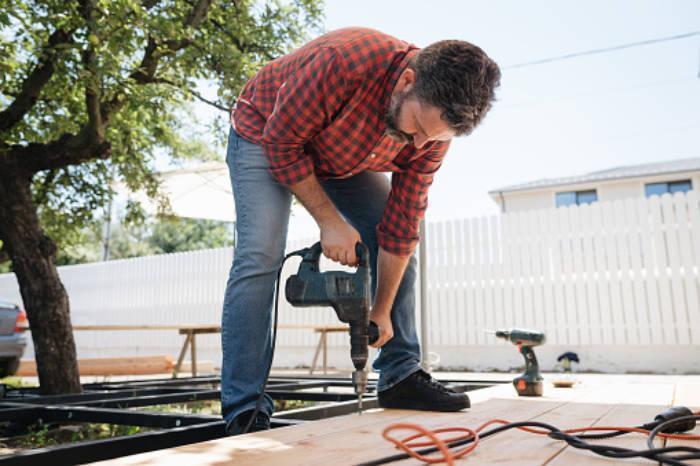
Deck builders usually work with one or two types of decking. You must opt for a deck builder who has experience working with the deck material of your choice. Nobody wants to hire someone who is a newbie. The last thing you need in your life is to have your deck builder try their hands at something new on your deck. Hiring a deck builder with experience is critical because they will discuss the pros and cons of the deck material you intend to use and help you make an informed decision.
2. Do You Have Staff Or Subcontract?
Deck builders often collaborate with other contracting companies to take care of some jobs on their behalf because it is not their area of expertise. While collaborating with other experts means having specialists working on your deck, it may result in communication issues between the two parties. Contracting companies with their own crews are more informed about their staff’s experience, skillset, and character. Aside from familiarity, they also have more control over every aspect of the job, thereby ensuring a more organized approach to work and better planning.
3. Will There Be A Supervisor On-Site?
Having a supervisor on the field is always a good idea. A supervisor ensures that everything is handled well and the work quality is up to the mark. Moreover, their authority is responsible for making critical decisions. If you have the option to choose between two contractors, always opt for the one with an on-field supervisor.
4. What’s Your Warranty?
Getting a deck builder for your home means investing in your home. Every deck builder should use quality products that come with a warranty. This is not a light bulb that you can discard after a year of use; this is a part of your home, so you expect things to last you for years to come. Not only should a deck builder provide you with a warranty of the products they are using, but they must also provide you with a warranty of their work and services. Be sure to ask for details of the specifics like coverage, etc.
5. Are You Licensed And Insured?
This is an easy one. The answer, in this case, should always be yes. If not, you know what you have to do. Ask your deck builder for their insurance certificate, license, and Work Safe BC credentials. If you sense any hesitation, resistance, or evasion, know that you must find another deck builder in Sherwood Park.
6. How Long Have You Been In The Business?
This rather simple question is important because it helps you understand how experienced your deck builder is in the decking industry. Steer clear of any dodgy deck contractors. They do not last particularly long in the market anyway. Look for established businesses because they are less likely to have a history of any financial or legal issues that could potentially affect your project.
7. Do You Have References?
Online reviews fall in the preliminary stage of assessment. You must look into personal customer references after you look at online ratings. Not only is it reassuring to talk to a past customer, but you can mutually go over some concerns that you harbor and whether the previous customers had to deal with any of them. Ask for their availability. If your deck builder is hesitant to connect them to you, know something fishy there.
8. How Do You Deal With Things When Something Goes Wrong?
Things go wrong all the time; every contractor has had to deal with them. You know you have a good deck builder on board when you have seen them dealing with things when they go wrong. Let your contractor tell you about a time when something went wrong and how they fixed the problem.
9. Will This Deck Require A Permit, And Do You Handle Permits?
When it comes to construction work, a permit is almost always necessary. Your contractor should know when you require one. While in most cases, the homeowner is required to take care of it; sometimes contractors handle it on your behalf. If nothing, they can at least guide you through the process.
10. Who Do You Know?
Every contractor has a list of contacts, i.e., service providers, to who they can refer you in case you need additional work done. If you need to hire a company to handle something that is outside the realm of your contractor’s skill set, ask them to connect you with someone they recommend for the job. References from your contractor will save you searching time and effort.
11. Do You Do Railings?
No deck is complete without railings. Ask your deck builder if they take care of railings. Get a quote for a railing re-do while discussing your deck project.
12. How Long Will It Take, And When Could You Start?
A timeline for project completion is essential. If you are getting a deck builder on board, you must plan everything out. Ask for a timeline estimate for the task to be completed so you can finalize things according to your timeline of task completion.
13. Do You Charge A Deposit?
Many deck builders charge a deposit to cover material costs and for the client’s peace of mind. A 10 to 30% deposit is common. A deposit over 30% rarely ever makes sense, so if you are presented with an estimate like that, be sure to inquire about the reasons behind it.
14. What Forms Of Payment Do You Accept?
Only cash or credit payments may seem like a basic question, but it is imperative. Only cash payments can be a bit of a red flag because the business may not be above board. Sort out all the nitty-gritty details before you sign any contract.
Parting Thoughts
Now that you are well informed about all the things you need to get done before saying yes to any deck builder, get sorting. Find your best pick, and you are on your way to having the deck of your dreams.
by DG | Jul 31, 2021 | DIY Backyard Ideas, Living Room Ideas, Outdoor Space Ideas
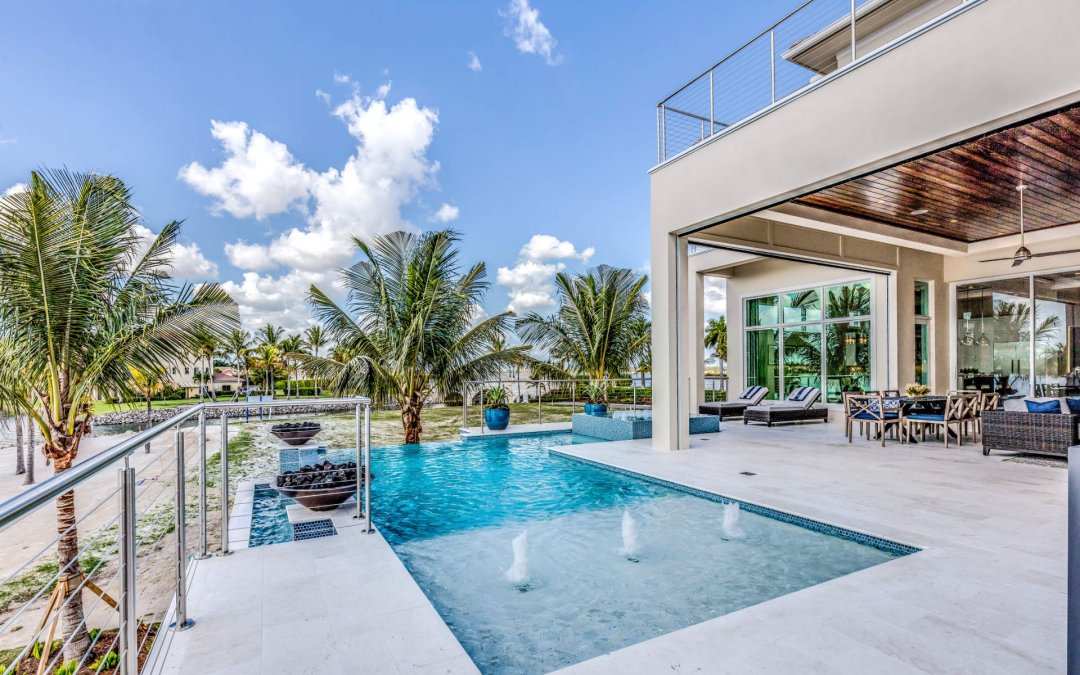
Outdoor Living Spaces have become so important to us that designing a well thought-out patio or outdoor living room has become even more essential. These spaces need to be able to serve both as attractive social areas for dining and entertaining, as well as as quiet reflection areas for escaping the stresses of everyday life.
You need to be careful when designing your garden ideas in order to strike a balance properly. In designing a patio, choosing the optimal location is imperative. You want to find a spot that takes advantage of the sun at the right time, is easy to reach from home and is suited for all your needs.
Ultimately, the design of the space will be determined by its intended use.
Here are some tips to help you through the process of designing a great outdoor living space along with some inspiration and patio design ideas.
Design the Outdoor Living Room for you.
Here are key steps to plan the ideal patio for you and your family.
How To Plan Your Outdoor Living Room Layout
It is important to choose the patio layout based on what purpose it will serve – as well as the furniture that will be placed in it. Do you entertain regularly? You will need to decide on what kind of patio furniture you prefer. Should it be a dining set for sit down dinner or maybe a lounging set with low tables, or perhaps both if you have the space. Think about how many people you will frequently be hosting and whether you will need to cover the patio with an awning or pergola.
You must also plan for the negative space on your patio – i.e., all the gaps and spaces between the various pieces of furniture. These negative spaces should be about 3 feet wide.
Drawing a patio to scale is the simplest way to design one that suits your preferences exactly. In this way, you can start planning your patio designs and plans from the start, including your planting beds, borders, and pot placement, and maybe even any outdoor kitchen ideas. Also consider one of the many free (or paid) apps for planning out your patio. With most you can even generate a 3D rendering so you can get a real vision of how it will come out.
What Is A Good Patio Size?
You should consider your backyard’s size and whether you would like your patio to be a dominant feature or merely an element. Generally, you should size a patio to accommodate the number of people it might regularly host – and that usually translates to about 25 square feet for each person. That’s 125 sq ft if you have five members in your family.
Designing A Patio With Zones
In the same way you would indoors, it is vital to consider the different zones that will exist on your patio right from the beginning. Be sure to incorporate shade into your plans for the outdoor dining area.
Additionally, you may want to create a relaxation zone, filled with potted plants or pots filled with fragrant flowers and herbs.
Where To Position A Patio
There are 3 main factors to consider when your a re deciding on the positioning of your patio: what you plan to use your patio for; where it will look best in the space you have; and whether you need privacy or not.
How you plan to use your patio: Your overall patio layout and design will depend on your intended uses, so a shady spot will work if it’s only for dining. If you enjoy the sun, a sunny spot will be perfect. Conversely, if your entire backyard is sunny and you want to create a dining area in a particular area of it, you can use clever garden shade ideas to perfect the space.
Where it will look best: If you have a large space, it’s fine if you should consider more than one garden and different areas for various purposes. Traditionally, patios are placed just outside your front door for convenience – but there’s no reason why you can’t have more than one. The best option for you may be at the end of your garden if the only sun spots are there, and if you can plant your garden to make the patio look charming from your house.
Patio placement for privacy: Outdoor Living Rooms need to feel private, but that does not mean that they have to be placed where your backyard is already secluded on purpose – you can create a new secluded area by utilizing a privacy fence or greenery.
Choosing Patio Materials
While staying on top of garden trends is always a good idea, it is equally essential that the design of your patio complements the style of the interior and the exterior materials on your home.
Modern homes should use contemporary materials and design styles, and more traditional homes will call for materials and styles that complement their overall style.
During the last few years, there has been a significant shift in material and finish options used for patio design, with maintenance and costs being key factors to consider when selecting a material.
Tips on making the best choices for patio material:
Complement The Architecture
Designing a patio that will complement the architecture of the house.
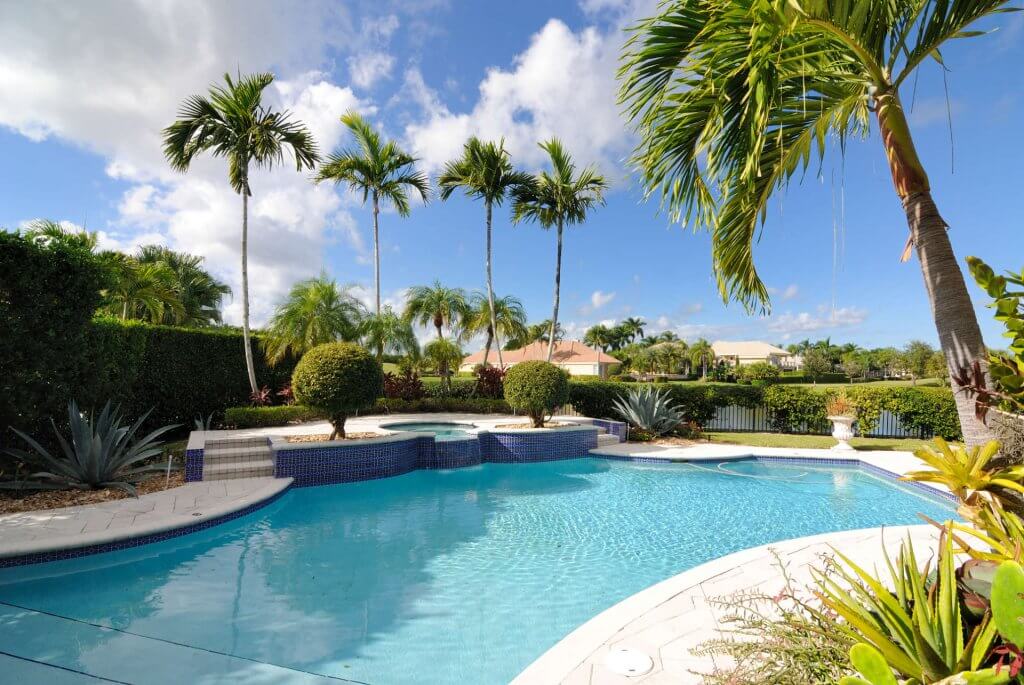
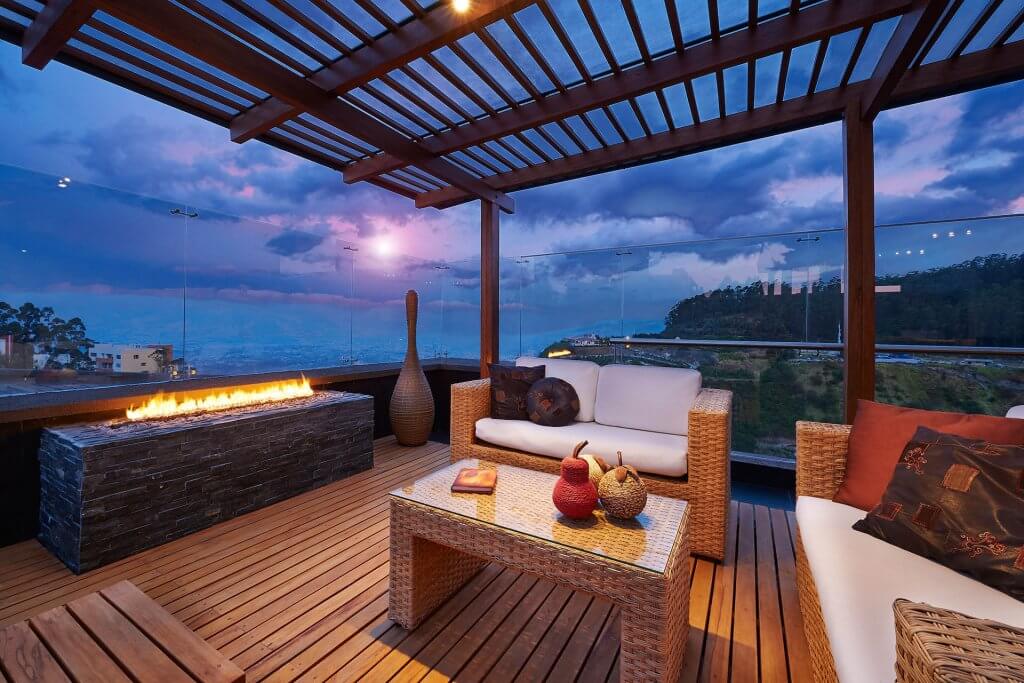
Choose Hardwood For Decked Patios
Designing a patio with layered decking and accentuate the features you have. If you have a waterside view, be sure to position the furniture so that view can be fully appreciated. Use glass railings for a sleek and timeless look. Add a pergola or some protection from the sun and rain so you can enjoy it as much as possible.
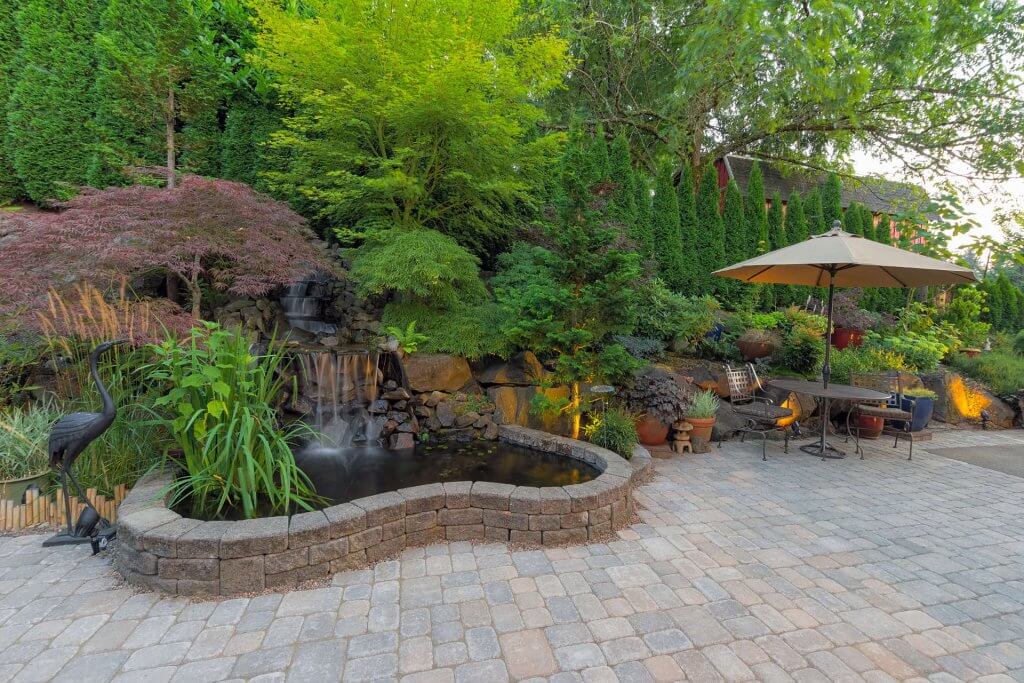
Select Brick For Character And Style
Brick paver and a waterfall feature that naturally blends into the environment. Combine different paver styles for a rich textured design.
Choose Stone That Is Sourced Locally
Incorporate interesting paver patterns. This will add elegance and character to your overall design.
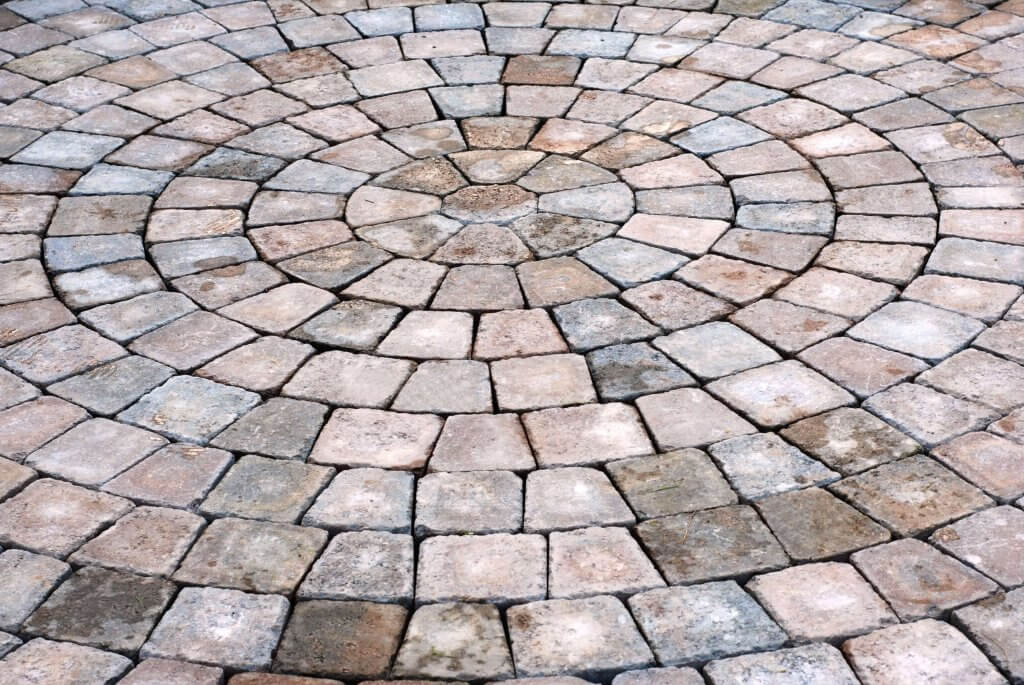
Talk to your local paver suppliers early in the process so you can get some ideas and the can help you get local stones that complement your patio design plans, like the rustic patio pavers above.
Add Beautiful Planting Into Your Patio Design
Planting factored in when designing a patio, with olive trees and bushy herbs around a brick patio with bistro table and chairs.
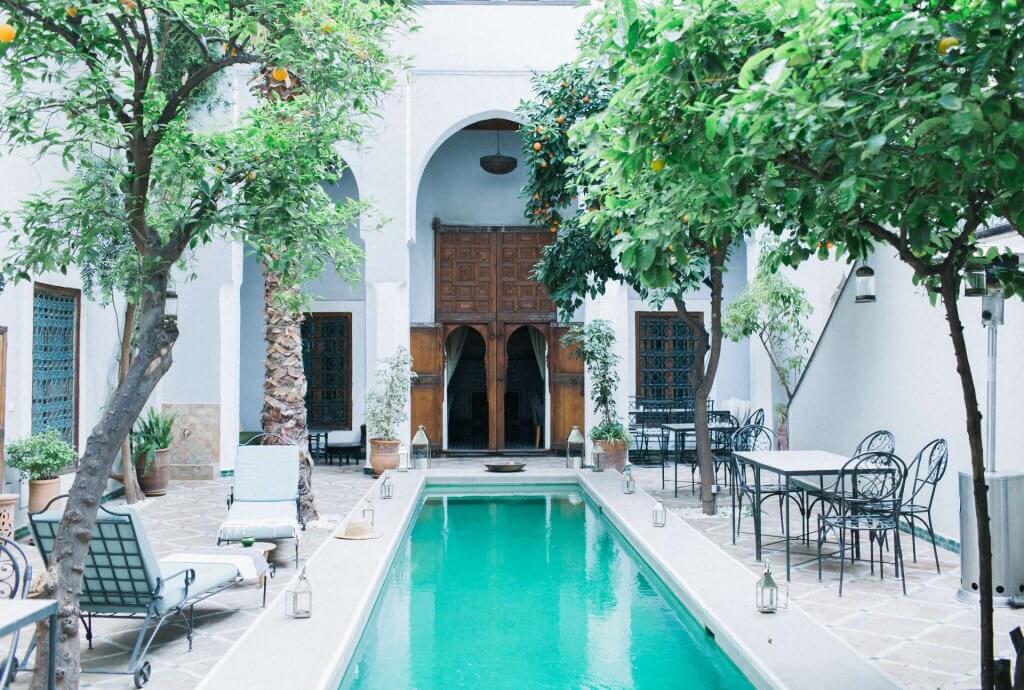
You can soften the edges of your outdoor living room by planting around them or dividing different zones with plants. If you have an existing backyard design, you can use it as inspiration for a planting scheme for your patio. Choose plants that match what you have successfully planted elsewhere in your garden . To create a stylish finish, add some stand-out plants, like specimen trees in containers.
Including Hardscaping In Outdoor Living Room
Design a patio with hard landscaping, featuring concrete pavers that with continuous flow into the house making the patio an extension of the living room.
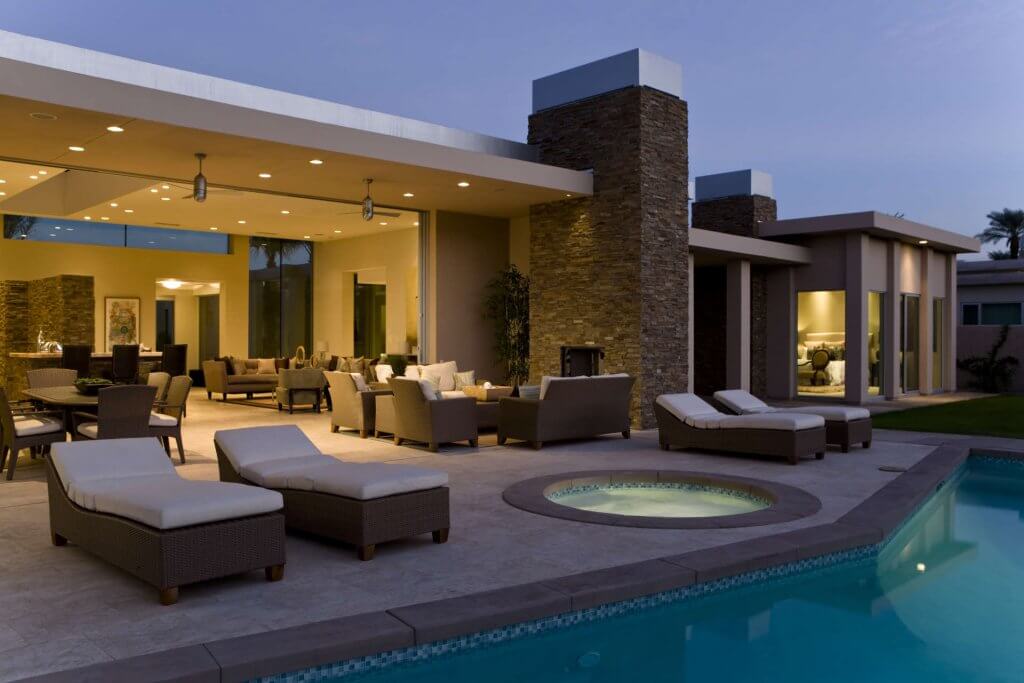
Hardscaping provides long-lasting, low maintenance beauty to your outdoor living room or pool patio.
The ultimate aim when building a patio is to have it resemble the exterior materials of your home, whether it is built from natural stone or cheaper rendered materials.
Finish your outdoor living room design by softening the overall look with comfy furniture and plants.
How To Design A Patio For Shelter
Designing a patio with a pergola for shelter, featuring shaded and partially shaded areas.
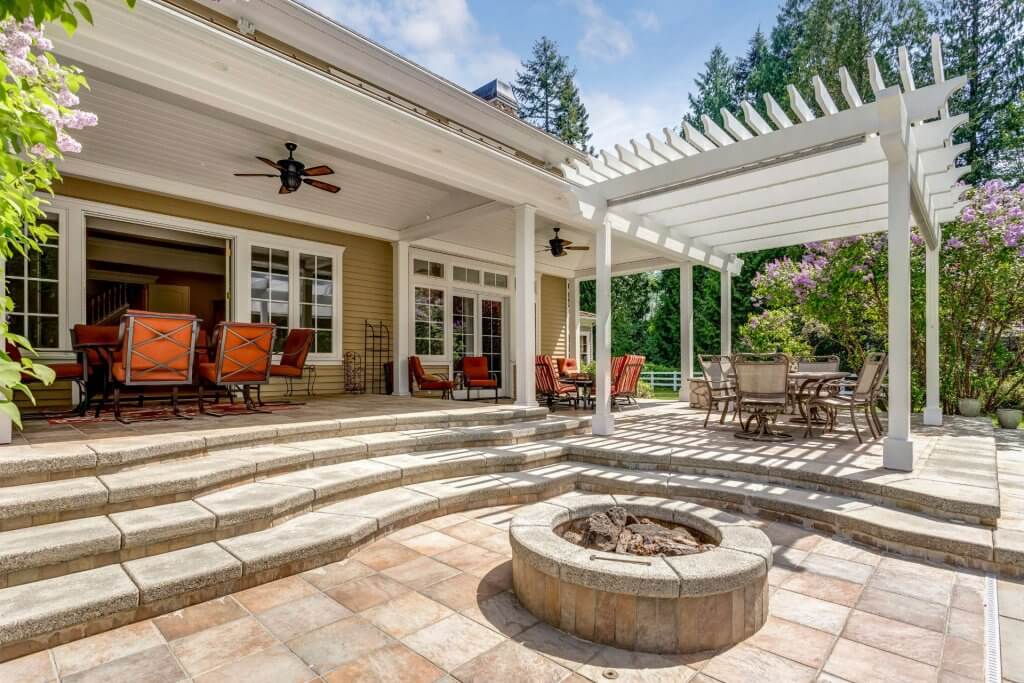
You can use pergola ideas to create dappled shade rather than full sun blocking on a patio and add height and structure to your space. Pergolas can be used to grow scented climbers or hang string lights, providing a secluded feeling for your patio.
Include Water Features Into A Patio Design
Adding a water feature can add a touch of natural elegance to your patio design.
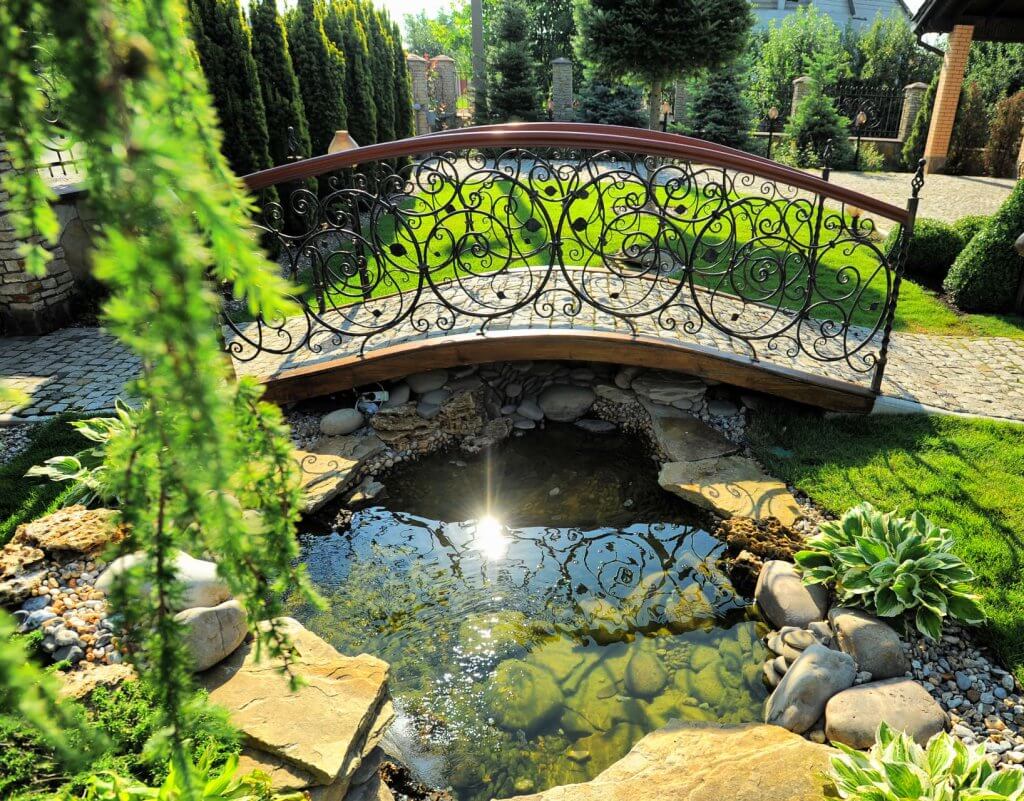
Water features are in high demand mainly as a focal point, but also because the sound of water or the calmness of a still mirror pool will transform a garden into a tranquil space.
Features with water can provide habitat for birds and other wildlife or create innovative ways to use water. Use them to attract wildlife or innovate new ways to use water.
How To Budget An Outdoor Living Room Design
How to design an outdoor living room on a modest budget…
The most expensive part of designing an outdoor living room is the hardscape – and while labor costs are fixed, different materials and design elements can reduce or increase the cost. If you are up for doing at least some of the labor, you can save a lot of money there too. Get estimates from local paver installers to find how the all-in cost would be and then plan your project accordingly.
Paving comes in a variety of natural stones and manufactured ones. Don’t forget to factor in the cost of laying down the foundation and labor to lay the pavers as well.
Also check out “How To Decorate Your Home Like a Pro“